 跳到内容

Quick answer: A dual-panel track light is usually worth evaluating when two broad target zones can be served from one rail position and a cleaner ceiling is important. Two separate fixtures are often better when the targets require different positions, narrow accents, separate circuit control or independent replacement. Compare the complete installed and maintained system—not only the number of light heads or the unit price.
Project buyers often ask whether a dual-panel linear track light can “replace two fixtures.” The honest answer is sometimes. Two adjustable panels can provide two aiming directions from one adapter, but two separate track heads can also move independently along the rail. The right decision depends on target geometry, photometric performance, controls, mechanical loading and the way the space will change.
We wrote this comparison to help you build a fair tender and avoid buying a visually attractive fixture that does not match the real lighting task. Use it for supermarkets, fashion stores, showrooms, big-box retail and flexible commercial spaces.
1. Define What “Replacing Two Fixtures” Means
The phrase can refer to four different outcomes:
- Optical replacement: one product creates the required light on both target zones.
- Electrical replacement: one adapter and driver connection replace two connections.
- Visual replacement: one ceiling object replaces two separate heads.
- Commercial replacement: total purchase, installation and maintenance cost is lower.
A dual-panel product may succeed in one category and not another. It may create a cleaner ceiling while using similar total power. It may reduce adapters but provide less circuit independence. State which result matters to your project before comparing offers.
2. Begin With Target Geometry
Draw a section through the track and target surfaces. Mark the two shelf faces, wall displays, floor zones or tables that require light. Then compare the aiming freedom of the two systems.
A dual-panel fixture has two directions from a shared point. Separate heads have two directions and two positions. If both targets can be reached well from the same point, the dual-panel arrangement may be efficient. If one target is near and another is several metres away, or one requires a narrow spot while the other needs a broad wash, separate fixtures may give the designer more control.
| Geometry | Likely stronger option | Reason |
|---|---|---|
| Opposing shelves around one centred track | Dual-panel worth testing | Two directions from one logical position |
| Two targets at very different locations | Separate heads | Independent movement along the rail |
| Broad wall plus broad circulation zone | Dual-panel worth testing | Panels can split general and vertical tasks |
| Two small high-contrast displays | Separate spotlights | Narrower control and independent placement |
| Frequently changing but repeating aisle layout | Compare both | Adjustment range and operating discipline decide |
3. Compare Photometric Results, Not Head Count
One luminaire is not automatically equivalent to two. Run both schemes with the exact IES/LDT files, mounting height, aiming and maintenance factor. Keep the target grids identical.
For retail, compare:
- vertical illuminance on each merchandise face;
- horizontal illuminance on floors and tables;
- minimum-to-average uniformity;
- spill above shelves and outside the target;
- direct and reflected glare;
- connected load required to meet the same maintained result.
If the dual-panel option uses fewer luminaires but requires higher output that increases glare, it has not achieved a useful replacement. If two separate heads provide beautiful accents but leave general circulation weak, they may need an additional ambient layer. Compare complete schemes.
4. Understand the Dual-Panel Product Envelope
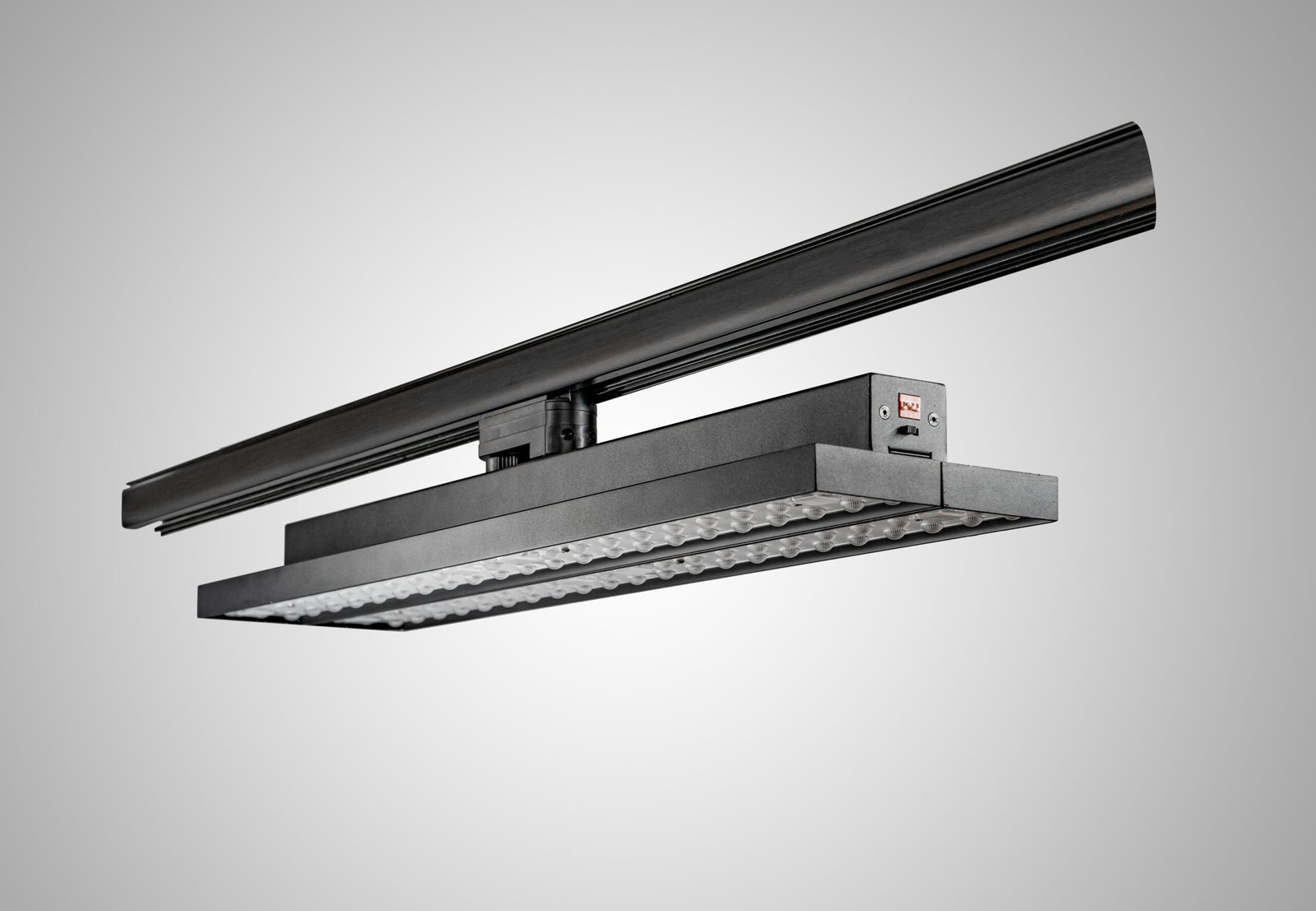
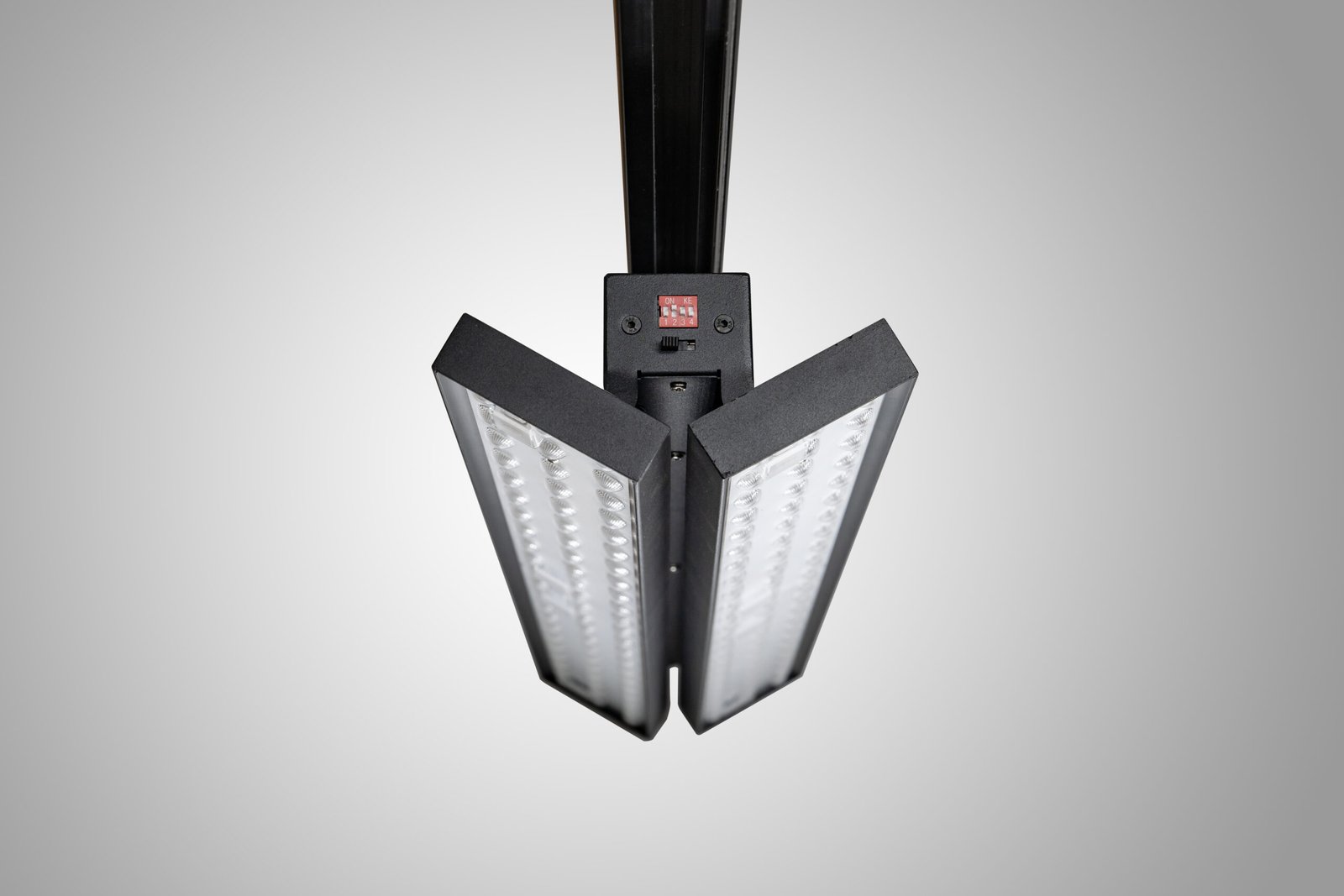
Our LL1615 adjustable dual-panel track linear light uses two long optical panels on one body. The body can rotate up to 350° and each panel can tilt independently up to ±90°. Current versions include 27 W, 40 W, 50 W and 60 W, with nominal complete-luminaire outputs listed from about 4,393 lm to 9,079 lm. Available beam options are 60° and 90°, with CRI above 80 or 90 depending on the configuration.
These specifications indicate where the product may fit: broad retail, shelf and commercial zones that benefit from directional flexibility. They do not make it a substitute for narrow-beam spotlights. Review the exact model on the dual-panel track linear light product page and ask for configuration-specific photometric data.
5. Compare Purchase Cost Correctly
A unit-price comparison can be misleading. Build a bill of quantities that includes:
- luminaire and driver;
- track adapter and any control components;
- additional rail length or connection accessories;
- installation labour;
- aiming and commissioning labour;
- spares required by the maintenance plan;
- packaging, freight and site handling;
- testing and certification documentation;
- future replacement or reconfiguration cost.
A dual-panel fixture may reduce adapter count, unpacking and installation points. Separate heads may have a lower individual replacement cost and allow the project to stock one common spotlight used elsewhere. Ask installers and maintenance staff to review the comparison, not only the purchasing team.
6. Check Track and Mechanical Loading
The rail must support the complete mechanical load and the forces created during adjustment. A larger dual-panel body may weigh more than a compact track head, even if it replaces two. Two separate heads distribute their weight at two positions, while the dual-panel product concentrates it at one adapter.
Confirm:
- rail manufacturer and model;
- allowed load per adapter and per metre of track;
- suspension spacing and ceiling fixing;
- adapter locking and orientation;
- clearance from signs, sprinklers and services;
- stability after repeated panel adjustment;
- installation and safety requirements in the destination market.
For retrofit work, inspect old rail, connectors and fixing points. Electrical compatibility alone does not prove mechanical suitability.
7. Compare Controls and Circuit Flexibility
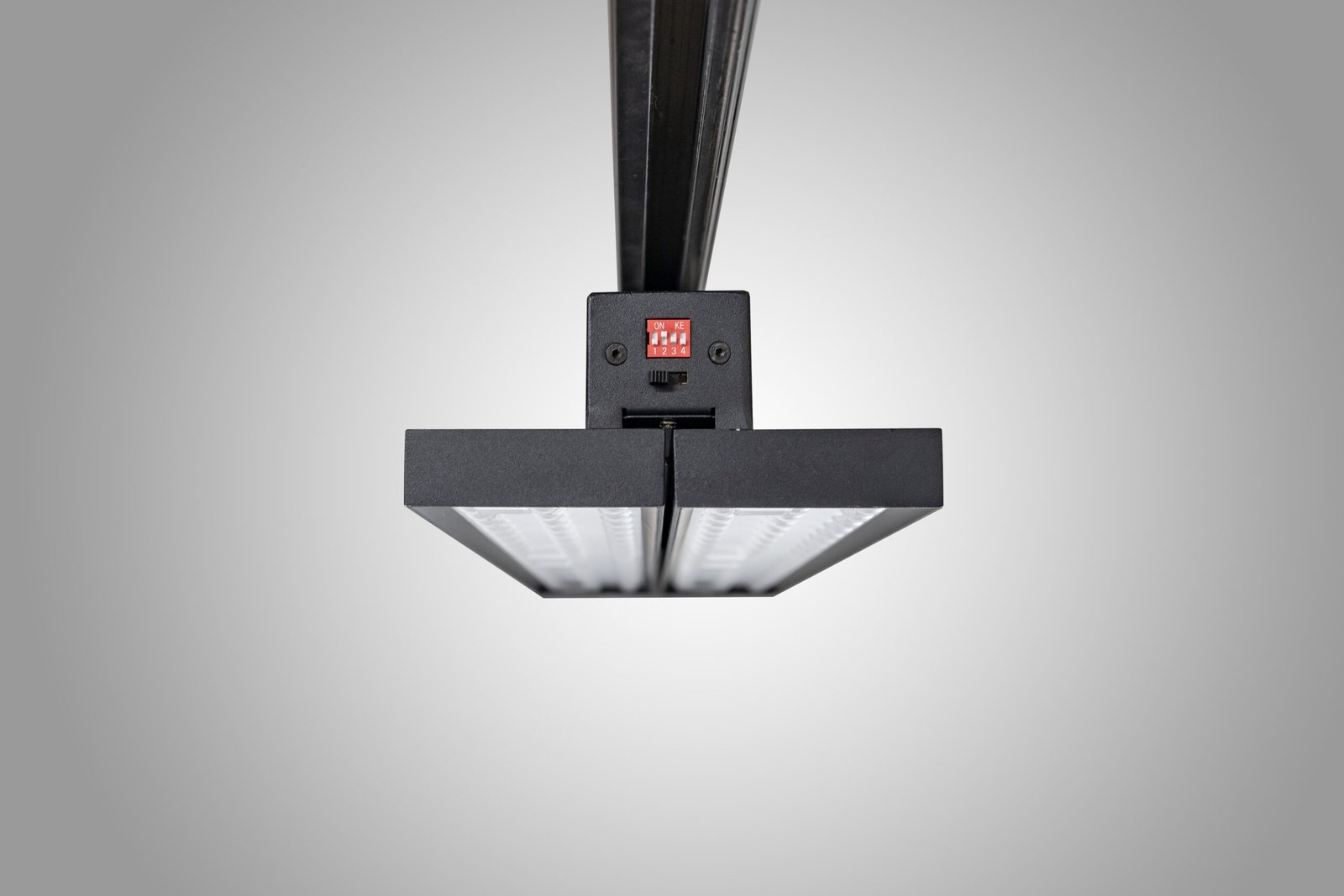
Two separate heads may be assigned to different circuits or addresses, depending on the track and control system. A dual-panel luminaire may operate as one electrical unit even though the panels move independently. If the client wants each target to switch or dim separately, confirm whether that is actually supported.
Ask these questions in writing:
- Do both panels share one driver and control address?
- Can output be adjusted by circuit, switch setting or dimming protocol?
- Which driver and adapter are supplied for the quoted option?
- Is DALI, 0–10 V, phase dimming or another system available?
- What is the dimming range and behaviour at low level?
- How is the product identified during commissioning?
A visible selector on a luminaire should never be assumed to provide continuous dimming or independent panel control. Use the supplier’s wiring diagram and final datasheet.
8. Consider Installation and Commissioning Time
Fewer adapters may shorten initial installation, but panel aiming can add commissioning steps. Separate heads are familiar to many installers, but doubling the number of heads also doubles attachment and aiming points.
Test one representative bay and record:
- time to unpack and install each option;
- ease of engaging and locking the adapter;
- time to aim two targets;
- whether the final position holds after adjustment;
- access required for driver or fixture replacement;
- labelling needed to repeat the approved layout.
Convert the result into a site method statement. The fastest sample installation by an experienced technician may not represent a large rollout completed by several crews.
9. Compare Maintenance and Failure Impact
When one separate head fails, the other can remain in service. If a dual-panel luminaire uses shared electrical components, one failure may affect both panels. On the other hand, maintaining fewer complete fixtures and adapters may simplify inventory and cleaning.
| Maintenance issue | Dual-panel fixture | Two separate fixtures |
|---|---|---|
| Number of ceiling items | Lower | Higher |
| Failure isolation | May affect both panels | Usually one head only |
| Spare strategy | One larger complete spare | Smaller heads, possibly shared with other zones |
| Cleaning | Two panels on one body | Two individual heads |
| Repositioning | Two aims from one point | Two aims and two rail positions |
Ask whether the driver, panels or optics are serviceable and how warranty replacements are handled. For chain stores, confirm that future batches will maintain compatible colour and mechanical appearance.
10. Evaluate Ceiling Appearance and Brand Intent
Lighting equipment is part of the architecture. A long, low-profile dual-panel fixture can look organised in linear aisles, while a dense collection of spotlights may create visual clutter. In a premium boutique, separate compact heads might be intentionally used to create focused theatrical accents.
Review both schemes in ceiling views and customer-level perspectives. The cleaner option is not automatically the one with fewer objects; alignment, colour, scale and track coordination matter. Ask the architect or brand team to approve the visible result before mass ordering.
11. Use a Life-Cycle Comparison
Compare cost over the expected operating period:
Life-cycle cost = purchase + installation + commissioning + energy + planned maintenance + expected replacement + reconfiguration cost.
Use the same lighting result for both options. Include operating schedule and control savings only when the control strategy will actually be commissioned. Avoid claiming savings from a lower connected load if the design fails to meet the target and will later require extra fixtures.
12. Build an Approval Mock-Up
Install both options in one representative aisle or display zone if project scale justifies it. Use real merchandise, shelf finishes and operating light levels. Invite design, operations, maintenance and purchasing teams.
Score each option on:
- target illuminance and uniformity;
- glare and reflections;
- appearance of merchandise;
- ceiling appearance;
- installation and aiming time;
- control behaviour;
- maintenance access;
- document quality and supplier support.
Document the chosen configuration with photos, measurements, photometric-file revision and order codes. Our RFQ and sample approval checklist can help structure this record.
Frequently Asked Questions
Does one dual-panel light always use less energy than two track heads?
No. Energy depends on the complete selected wattages, driver performance, controls and operating hours. Compare designs that meet the same maintained target.
Can the two panels be aimed independently?
Yes, the LL1615 panels tilt independently. Confirm the final mechanical range and any electrical-control relationship in the project datasheet.
Which option is easier to maintain?
It depends on access, serviceability and spare strategy. A dual-panel fixture reduces ceiling items; separate heads can isolate failures and share spares with other areas.
Which option works best for retail shelves?
A dual-panel design is attractive when two broad shelf faces are reachable from one rail position. Separate heads may be better for narrow accents or targets requiring different rail positions.
What should we request before deciding?
Request exact photometric files, drawings, track compatibility, driver/control details, weight, certificates, samples and a calculation for both alternatives.
Final Decision Framework
Select the dual-panel option when the geometry supports one mounting point, the two broad targets benefit from separate aim and the cleaner ceiling or reduced adapter count creates real value. Select separate fixtures when positional freedom, narrow beams, independent circuits or failure isolation are more important.
If you send us the plan, section and required target illumination, we can help you build a like-for-like comparison instead of making the decision from fixture count alone.
