 跳到内容
跳到内容 
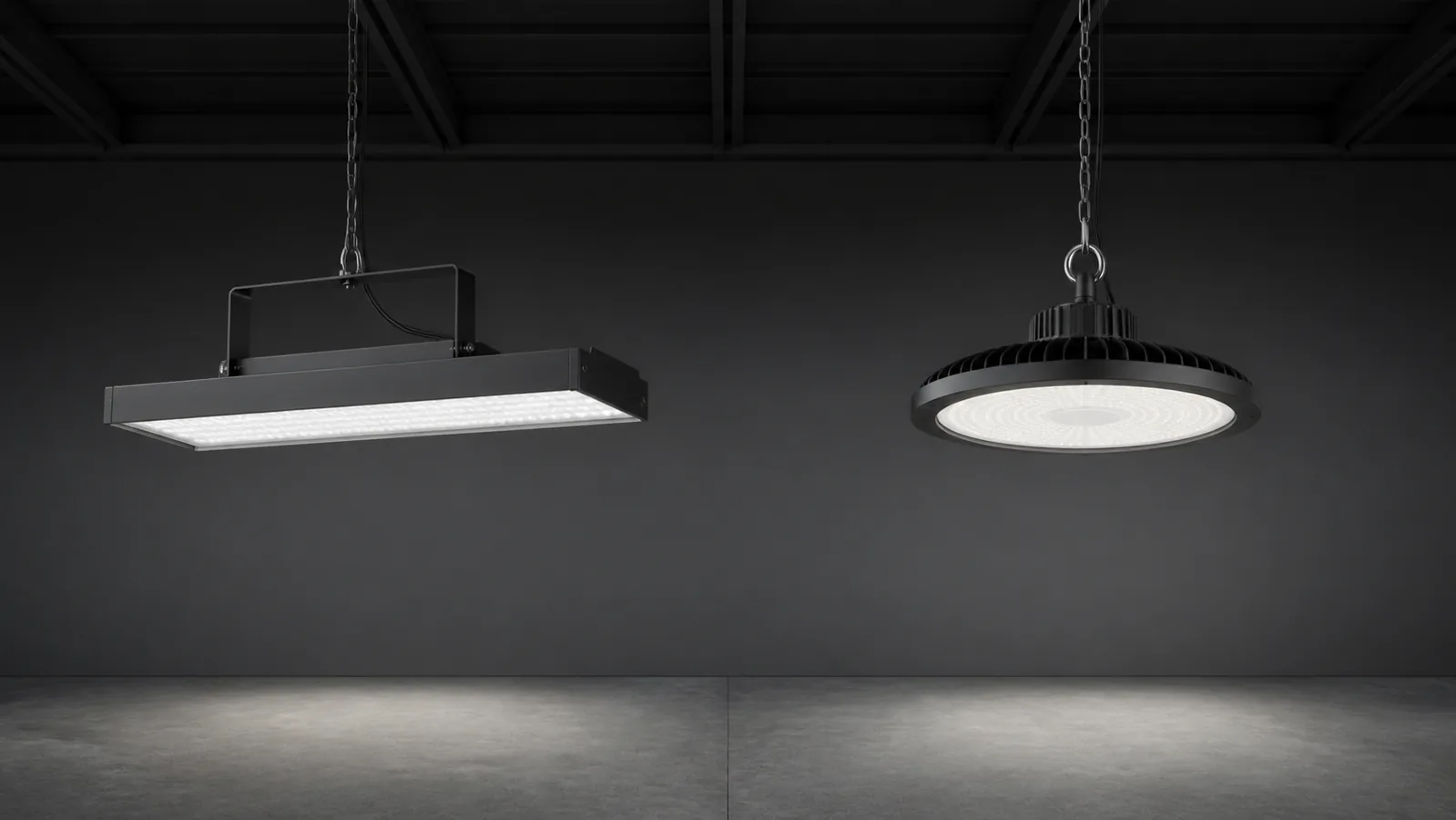
Buyers often ask LCB Light whether a linear high bay or a UFO high bay is “better.” Our answer is that the building should decide. We compare both formats against the same rack plan, work areas, mounting conditions and operating schedule so the final choice is supported by photometrics and installed cost.
The linear high bay vs UFO high bay decision should follow the building geometry and lighting target. Both formats can be efficient and durable. Their main differences are physical shape, light distribution, mounting approach and how naturally they fit aisles or open areas.
Shape and distribution
Linear high bays use a long housing that can align with warehouse racks, production lines and rectangular work zones. They often offer broad, narrow or aisle distributions. UFO high bays use a compact round housing and commonly provide symmetrical coverage for open floors, workshops and sports spaces.
Aisles versus open areas
In tall rack aisles, a linear fixture with the correct aisle optic can place more light along the corridor and on vertical shelf faces. In open storage or manufacturing areas, round UFO fixtures can provide simple, regular grids. This is a general tendency—not a rule. Photometric distribution matters more than housing shape alone.
Glare and visual comfort
Either type can cause discomfort if excessive output is concentrated in a small bright aperture or fixtures sit in common sightlines. Compare lens area, optical control and calculated luminance. Mounting height and observer position are part of the glare evaluation.
Installation and flexibility
| Factor | Linear high bay | UFO high bay |
|---|---|---|
| Typical fit | Racks, rectangular zones, production lines | Open floors and regular grids |
| Mounting | Chain, cable or bracket; alignment matters | Hook, pendant or bracket; compact footprint |
| Optics | Strong choice for aisle distributions | Commonly symmetrical, with optional beam choices |
| Handling | Longer body may need two-point support | Compact body can simplify handling |
Controls, environment and maintenance
Both formats can support sensors and dimming when equipped with compatible drivers. Compare sensor placement, emergency requirements, ambient-temperature range, IP rating, surge protection and driver access. Replacement strategy also matters: confirm whether drivers, sensors and optical parts can be serviced without removing the complete fixture.
How to make the final choice
- Model both options in the actual rack or floor plan.
- Compare maintained illuminance, uniformity and vertical light.
- Check glare, connected load and control zoning.
- Review mounting labor and long-term access.
- Evaluate complete installed cost, not only fixture price.
For a fuller specification process, read our LED linear lighting overview and warehouse selection guide.
Compare lifecycle cost, not only purchase price
Include fixture quantity, connected load, controls, mounting accessories, wiring changes, installation hours and access equipment in the cost model. Maintenance frequency and the availability of compatible drivers or sensors can influence long-term value. A lower fixture price may not create the lower installed cost if more units or more difficult mounting are required.
For an existing building, compare the proposed layout with measured conditions and actual operating hours. Controls may produce greater savings in low-occupancy aisles than a small difference in luminaire efficacy.
Document the linear high bay vs UFO high bay calculation assumptions, including depreciation and surface reflectance. This makes vendor proposals easier to audit and prevents unlike photometric scenarios from being compared as though they were equal.
How we make the comparison fair
We use the same room dimensions, reflectances, maintenance assumptions and target light levels for both layouts. Each option should use a real photometric file for the quoted product. Comparing a narrow linear optic with a very wide UFO distribution under different assumptions will not produce a useful decision. We also compare connected load and fixture count, not only the efficacy printed on each datasheet.
A simple decision pattern we often use
For long rack aisles, we first test a linear fixture with an aisle distribution because it can align with the geometry and support vertical light. For open receiving, production or sports areas, we test a UFO layout because symmetrical coverage and compact mounting may be convenient. Mixed buildings can use both. The correct answer is allowed to vary by zone.
Installation details can change the result
At LCB Light, we ask whether existing hooks, chains or brackets will be reused and whether one person can safely handle the fixture. A compact UFO can simplify some installations, while a linear high bay may require two suspension points and careful orientation. Sensor position, emergency gear and cable entry should be included in the comparison.
What buyers should request with each proposal
- A layout report using the correct photometric file
- Complete model codes and mounting accessories
- Connected load and control-zone assumptions
- Ambient, surge and environmental ratings
- Driver and sensor access information
Our commercial recommendation
Do not award the project from one fixture price. Compare the complete installed solution, including quantity, accessories, wiring, controls and access equipment. At LCB Light, we can review the building plan and discuss whether our linear high-bay options suit the aisle or production geometry. If a round high bay is the more logical format for a zone, the photometric comparison should show that clearly.
This evidence-based approach builds trust with installers and end users. It also gives purchasing teams a defensible reason for the selected format instead of relying on a general claim that one housing shape is always superior.
Let the comparison lead the purchase
If you send the building plan, we recommend calculating representative zones before choosing the housing format. At LCB Light, our linear-high-bay discussion can include optic, output, sensor and mounting choices for the actual geometry. Even when another format remains under consideration, a common comparison sheet helps you understand why quantities and costs differ. The most persuasive proposal is one that makes its assumptions visible.
An illustrative mixed-facility decision
Imagine a logistics building with narrow racks, open staging and a maintenance workshop. We would likely test linear aisle optics between racks, symmetrical UFO coverage in staging and whichever format best fits the workshop structure. The result may be a mixed schedule. That is not a failure to standardize; it is a response to three different visual tasks.
Standardization can still occur at the driver, control protocol, CCT and documentation level. At LCB Light, we recommend identifying which common elements simplify maintenance without forcing one housing shape into an unsuitable zone.
Retrofit and new-build priorities
In a retrofit, existing hooks, circuits and fixture positions may strongly influence cost. A UFO high bay can sometimes fit an existing single-point suspension, while a linear fixture may require new support. In other buildings, an existing fluorescent high-bay line makes the linear format easier. Survey the real mounting and cable conditions before assuming a one-for-one conversion.
A new build offers more freedom. The layout can be developed around racks, structure and controls from the beginning. We recommend using that opportunity to optimize fixture positions rather than copying a legacy grid.
How to interpret competing vendor layouts
Two suppliers may propose different quantities because they use different target levels, maintenance factors, optics or calculation grids. Ask each vendor to state assumptions and provide the report. Compare uniformity and vertical illumination as well as average lux. If one proposal appears dramatically cheaper, investigate whether it omits controls, accessories or difficult zones.
At LCB Light, we welcome a transparent comparison. It allows us to explain where a linear high bay creates value and where the building may favor another solution. This approach builds commercial credibility because the recommendation follows evidence instead of a blanket product claim.
Our final answer to “which is better?”
The better high bay is the one that produces the required maintained light with acceptable glare, practical installation and a defensible lifecycle cost in the actual building. Sometimes that is a linear fixture; sometimes it is a UFO; often a mixed site needs both.
At LCB Light, we recommend putting the competing options into the same calculation and cost table. Once quantity, load, controls, mounting and maintenance are visible, the decision becomes less subjective. Buyers can then negotiate price without losing the technical reason the product was selected. We can begin with one representative zone when a complete building model is not yet available, then refine the comparison as rack and structural information develops.
Before issuing the purchase order, record the approved photometric file, mounting accessory, sensor setting and driver model beside every luminaire code. This small handover step protects the calculation when the project moves from the designer to purchasing, installation and maintenance teams. It also makes future replacement quotations more accurate because the original configuration can be identified without relying on appearance alone.
Frequently asked questions
Are UFO high bays always cheaper?
No. Price depends on output, driver, optics, controls, ratings, accessories and supplier. Compare equivalent installed configurations.
Can linear and UFO high bays be used in one building?
Yes. A warehouse may use aisle-oriented linear fixtures between racks and round fixtures in receiving or open production zones.
Discuss Your LED Linear Lighting Project
Share your application, dimensions, target output, optics, controls and installation requirements. The LCB Light team can help evaluate a suitable linear-lighting configuration for your project.

