 跳到内容
跳到内容 
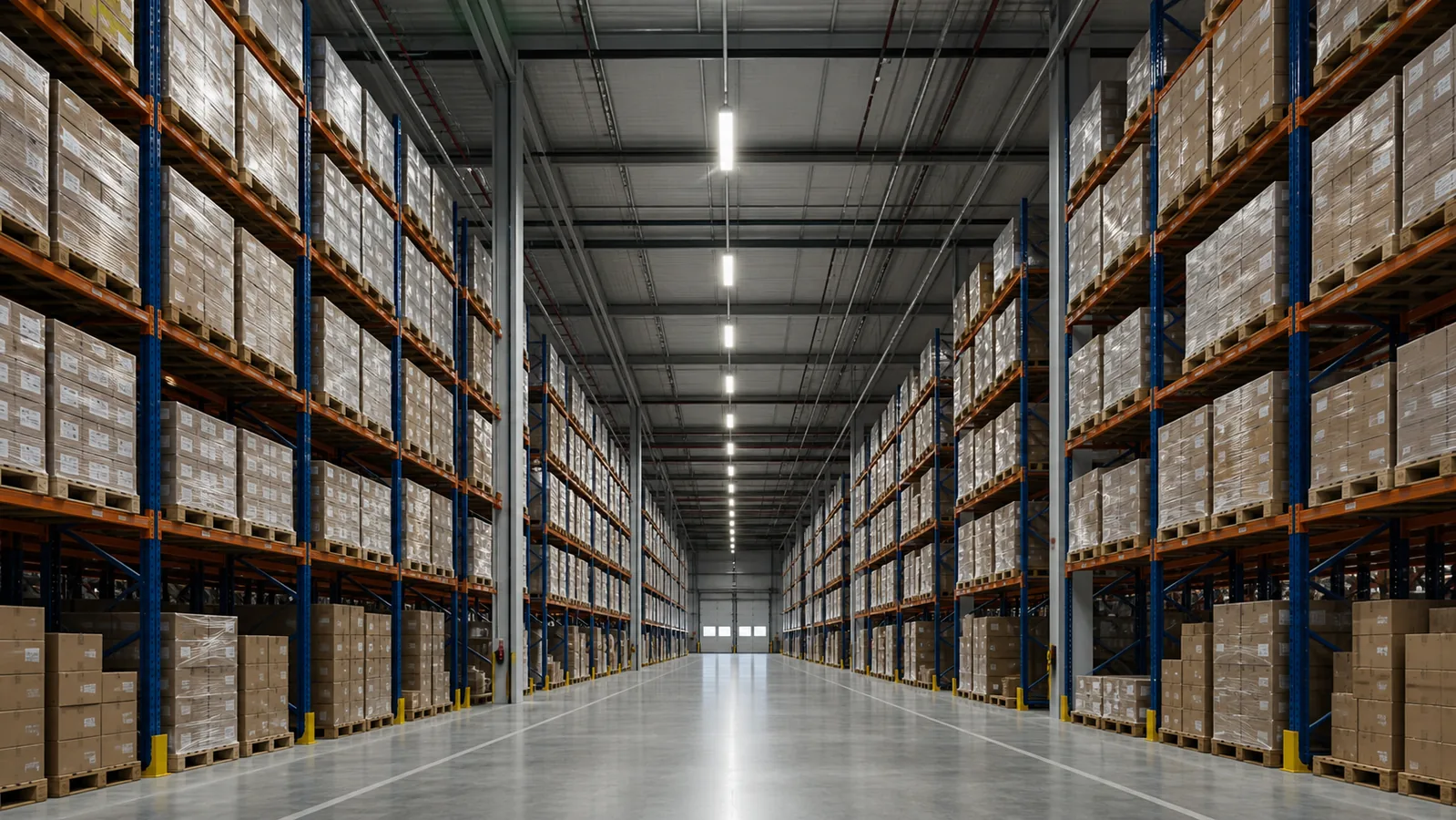
At LCB Light, we start warehouse discussions with the building plan rather than a preferred wattage. In our experience, buyers get better results when fixture shape, beam distribution and controls are selected around the real aisles, racks and operating schedule. This guide explains the questions we would ask before recommending a linear high-bay configuration.
An LED linear high bay light is designed for large spaces with high mounting points, but height alone should not decide the specification. Warehouse geometry, rack position, visual tasks and operating hours all affect the result. A well-selected system places useful light on floors, shelves and labels without wasting output above the racks.
Start with the warehouse, not the wattage
Record the mounting height, aisle width, rack height, floor reflectance and target work plane. Open production floors normally need broad, even coverage. Narrow rack aisles need a distribution that pushes light down the aisle and onto vertical shelf faces. Before comparing fixtures, build a simple lighting layout and define maintained illuminance rather than relying on initial lumens.
Choose optics for the space
Wide-beam optics can reduce fixture count in open areas, while aisle optics concentrate output along long corridors. The right optic often improves uniformity more effectively than adding wattage. Ask for IES or LDT photometric files and simulate the actual rack layout. Our guide to LED linear light spacing and layout explains the same principle for lower mounting heights.
Compare lumens, power and efficacy
Wattage is electrical input, not brightness. Compare delivered lumens, system efficacy and the output option used in the photometric file. Higher output is not automatically better: excessive brightness can create glare, hot spots and unnecessary energy use. See our lumens and wattage guide for a practical comparison method.
Consider controls and operating conditions
- Occupancy sensing: useful in intermittently occupied aisles.
- Daylight harvesting: valuable near skylights or loading doors.
- Dimming: supports staged output and energy targets.
- Temperature rating: confirm suitability for hot ceilings, cold stores or unconditioned buildings.
- Ingress and impact protection: match dust, moisture and activity levels.
Driver access, surge protection, emergency requirements and control compatibility should be resolved before ordering. A sample installation can reveal sensor behavior, glare and cable-management issues that are difficult to judge from a datasheet.
Warehouse selection checklist
- Confirm mounting height and rack plan.
- Set maintained horizontal and vertical illuminance targets.
- Select open-area or aisle optics.
- Verify IES/LDT files and driver configuration.
- Check temperature, IP and emergency requirements.
- Review installation method, controls and maintenance access.
What to include in a high-bay quotation
For a useful quotation, provide a floor plan or rack drawing, mounting height, supply voltage, operating schedule, target illumination, control preference and environmental conditions. Ask the supplier to state the exact luminaire code, quantity, optic, output, driver, mounting accessory and connected load used in the proposal. This allows installers and decision-makers to compare alternatives on equal terms.
For retrofit work, also record the existing circuit arrangement and mounting points. A one-for-one replacement may be convenient, but it is not always the best layout for LED optics. Recalculating the space can reduce connected load or improve vertical illumination without adding fixtures.
How we would review a warehouse inquiry
We normally ask for a CAD or PDF plan, rack heights, aisle widths, mounting points and supply voltage. If the plan is not available, a dimensioned sketch and clear site photos can still reveal whether the space behaves like an open floor, narrow-aisle warehouse or mixed facility. We also ask what people need to see: floor obstacles, labels, stored goods, machine details or loading activity. These tasks affect horizontal and vertical illumination priorities.
Once those inputs are clear, we can compare output and optic options in the same layout. We recommend reviewing maintained results, not only the brightest initial calculation. Dirt, ambient temperature and operating time can change performance over the life of the installation.
A practical buying scenario
Consider two linear high bays with similar wattage. One uses a broad distribution and produces a good average lux value on an empty floor. The other uses an aisle optic and places more useful light on the rack faces. In a real warehouse, the second option may support label reading and picking accuracy more effectively even if its headline lumen figure is lower. This is why we do not treat wattage or efficacy as a complete specification.
Questions we recommend asking before approval
- Does the supplied photometric file match the quoted optic and lumen package?
- Where will sensors be mounted, and can they detect movement between tall racks?
- Can the driver, sensor or emergency component be accessed after installation?
- Are suspension parts, safety cables and connectors included in the quotation?
- Will the same LED, driver and optic be used in the production order?
Where manufacturer support adds value
A manufacturer should help turn the layout into a clear bill of materials. At LCB Light, we encourage buyers to send the mounting plan and control requirements before finalizing quantities. That allows us to discuss suitable optics, output choices, accessories and sample needs together. Our objective is not to recommend the largest wattage; it is to identify a configuration that can be installed, commissioned and maintained with fewer surprises.
If the project includes several warehouse zones, we recommend treating them separately. Receiving, racks, packing and open production may need different distributions or sensor settings while still using a consistent product family. This approach can improve visual continuity and simplify spare-part planning.
Information that helps us prepare a useful proposal
Please include the site plan, mounting height, rack arrangement, operating temperature, voltage, required controls and approximate quantity. If you are replacing existing fixtures, add their wattage, spacing and any problems users report. With those inputs, we can discuss a sample or layout-based proposal instead of offering a generic high-bay price. The result is easier for purchasing, engineering and installation teams to evaluate together.
An illustrative warehouse zoning exercise
Imagine a facility with 10-meter rack aisles, a lower packing zone and an open receiving area. We would not force one output and optic across the entire building. For the racks, we would first test an aisle distribution and review vertical illumination on shelf faces. For packing, we would prioritize comfortable uniform light over worktables. In receiving, a broader distribution and a different sensor zone may be more practical. The fixtures can still share a visual family, driver strategy and spare-parts plan.
This zoning exercise helps the buyer understand why a bill of materials may contain several codes. It is not unnecessary complexity when every option has a defined purpose. We recommend labeling the codes by zone on the quotation and layout so installers know where each optic and output belongs.
How we balance performance and project cost
The least expensive fixture is not always the lowest-cost installation. A suitable optic may reduce quantity, but a very specialized product can increase lead time or spare-part complexity. We compare fixture count, connected load, controls, installation accessories and access requirements. We also ask whether the buyer values the fastest payback, lowest initial cost or greatest future flexibility. Those priorities can lead to different choices.
At LCB Light, we prefer to show alternatives when the project allows them. One option may use a standard output and more fixtures; another may use a higher output with wider spacing. A layout-based comparison makes the trade-off visible. It also prevents a quotation from appearing cheaper only because it assumes fewer accessories or a different light target.
Commissioning and final acceptance
After installation, verify representative aisles and work zones with the intended control settings. Sensors should detect expected movement without activating unnecessary areas. Check that linear fixtures are correctly oriented; an aisle optic installed at 90 degrees cannot perform as calculated. Compare measured conditions with the design while recognizing that racks, stored goods and surface reflectance affect results.
We recommend keeping the approved layout, product codes, driver settings and spare-parts list with the facility records. This information supports future expansion and helps maintenance teams replace a fixture with the correct optic. A warehouse project is commercially successful when the system remains understandable after the original design and installation teams have left.
Our final recommendation
Choose the layout and optic before negotiating the final wattage. When the technical basis is agreed, price comparisons become clearer and fewer assumptions remain hidden. We can review a representative warehouse zone first, then extend the approved logic to the rest of the facility.
Frequently asked questions
Are linear high bays only for rack aisles?
No. They also work well above production lines and open warehouse zones when the selected distribution matches the area.
Should I choose a linear or round high bay?
It depends on geometry, mounting and maintenance priorities. Our comparison of linear high bays and UFO high bays examines the decision in detail.
Discuss Your LED Linear Lighting Project
Share your application, dimensions, target output, optics, controls and installation requirements. The LCB Light team can help evaluate a suitable linear-lighting configuration for your project.

