 跳到内容
跳到内容 
Choosing the wrong light spectrum can ruin a commercial project. Poor color rendering, eye fatigue, and complaints from clients often start with misunderstood lighting specs.
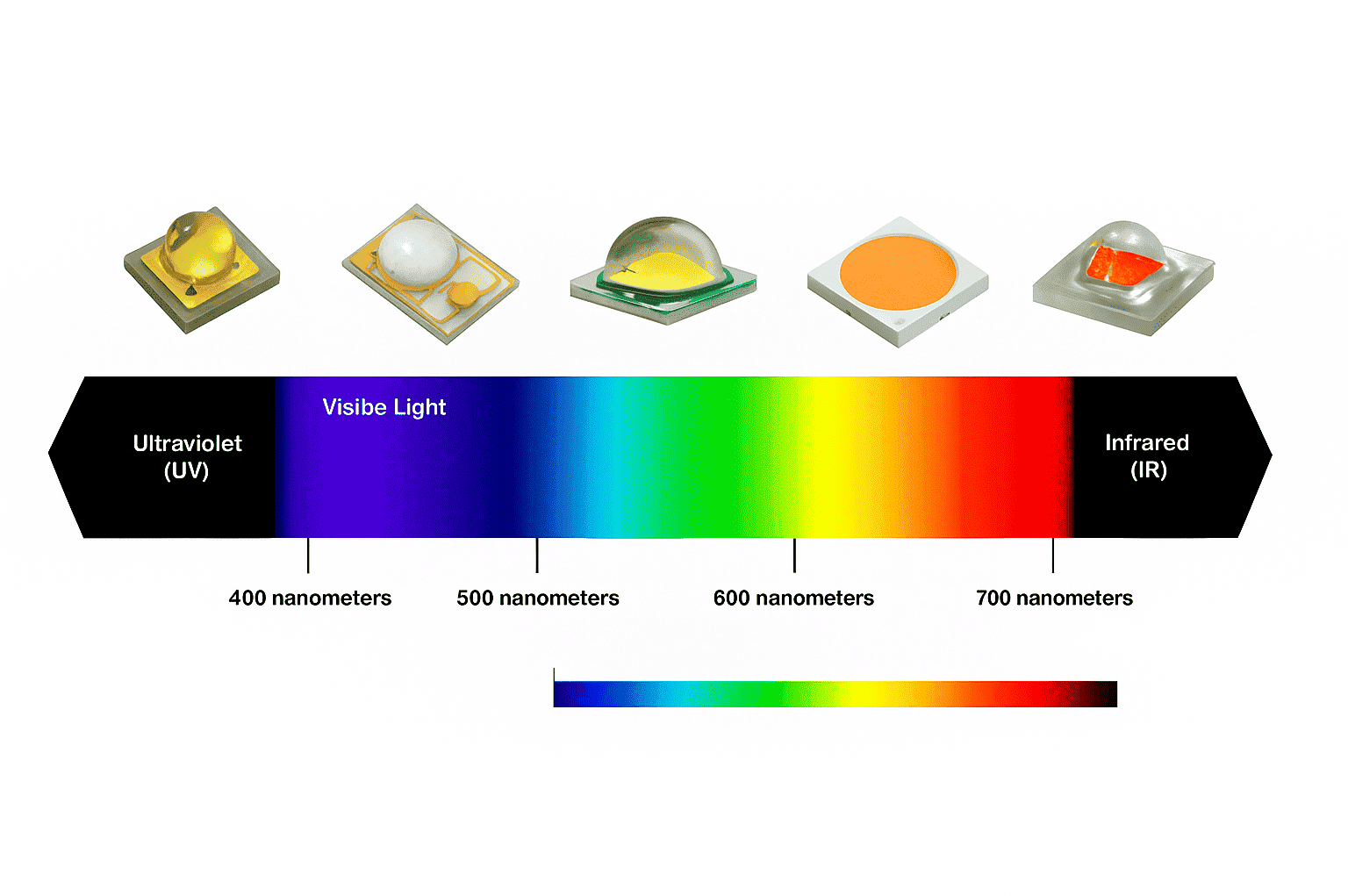
The visible light spectrum ranges from 400nm to 700nm, and different wavelengths affect how we see color and brightness. Choosing the right spectrum improves visibility, comfort, and sales performance in any space.
A few years ago, I worked with a hotel client who complained their newly installed lighting made the space look “dull.” We later realized the LED supplier they used focused on lumen output, not on spectral quality or color rendering. That was the moment I truly understood how vital the visible spectrum is in LED lighting—not just technically, but for business results too.
Let me walk you through why the visible spectrum matters, and how to choose the right LED spectrum for your projects.
What exactly is the visible light spectrum?
Clients often ask me why lights with the same wattage can look so different. The answer always comes down to the spectrum.
The visible light spectrum is the portion of electromagnetic radiation that the human eye can see, ranging from 400 to 700 nanometers. It determines how we perceive color and clarity.
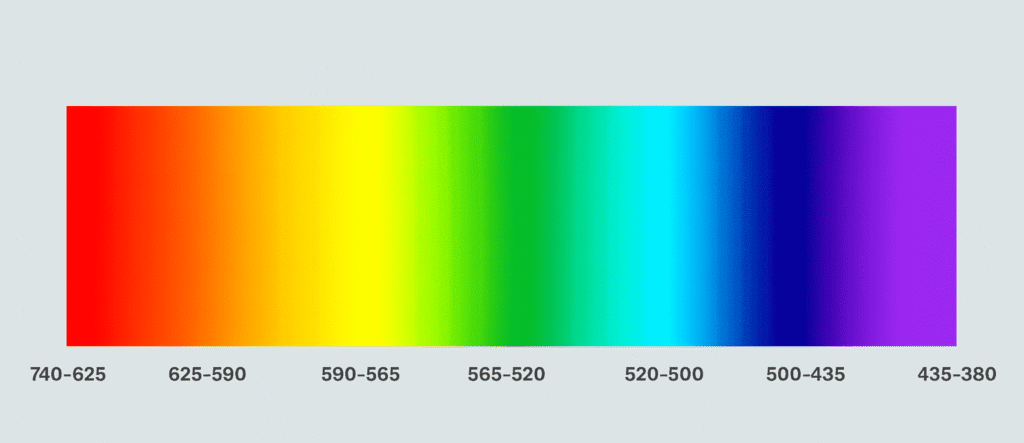
The Wavelength Breakdown
| Color | Wavelength (nm) | Common Perception |
|---|---|---|
| Violet | 400–450 | Cool, crisp, futuristic |
| Blue | 450–495 | Alert, focused, clean |
| Green | 495–570 | Balanced, calm, natural |
| Yellow | 570–590 | Warm, friendly, welcoming |
| Orange | 590–620 | Energetic, lively |
| Red | 620–700 | Warm, intimate, relaxing |
Each nanometer range activates specific photoreceptors in our eyes. When manufacturers engineer LEDs, they combine phosphors and chips to hit a desired spectral profile. This decision influences how well products display color, how comfortable they feel to the eyes, and how energy-efficient they are.
A common mistake I see is overemphasizing lumens while ignoring color quality. Lighting with poor spectral balance often causes objects to appear washed out or unnatural. This is especially problematic in retail, hospitality, or offices where color accuracy directly affects perception and behavior.
How does the light spectrum affect LED color performance?
Ever installed a “cool white” LED that made a space look too cold and sterile? That’s a light spectrum problem.
The LED spectrum affects two main factors: color temperature (CCT) and color rendering index (CRI), which together define how colors appear under the light.
Understanding CCT and CRI
| Term | Description | Ideal Range (Depending on Application) |
|---|---|---|
| CCT (K) | Correlated Color Temperature | 2700K–3000K (warm), 4000K–5000K (neutral), 6000K+ (cool) |
| CRI | Color Rendering Index | 80+ for general use, 90+ for retail/art/hospitality |
Low CRI means poor color definition. High CRI with a well-balanced spectrum brings out natural tones in skin, wood, clothing, and food. I’ve seen restaurants boost table turnover and customer satisfaction simply by changing from CRI 75 to CRI 90 lighting.
For commercial spaces like Mike’s projects in Germany—where product presentation is everything—this matters even more. If a light doesn’t render colors properly, customers may reject perfectly good merchandise.
Which spectrum should I choose for different commercial spaces?
There’s no “one-size-fits-all” in lighting. The right spectrum depends on who’s using the space and what they need to see.
For offices, retail, hotels, or supermarkets, selecting the right spectrum helps create the right mood, improve visibility, and support productivity or sales.
Recommended Spectrums by Application
| Application Area | Recommended CCT | CRI | Notes |
|---|---|---|---|
| Office | 4000K–5000K | 80–90 | Supports focus, reduces eye fatigue |
| Retail Clothing | 3000K–4000K | 90+ | Enhances natural fabric colors |
| Supermarkets | 3500K–4500K | 85–90 | Balanced look for food and packaging |
| Hotels / Lobbies | 2700K–3500K | 90+ | Creates comfort and premium ambiance |

In one case, a supermarket contractor I worked with changed their lighting from 6000K to 4000K. Sales in their fresh food section increased 17% in two weeks. Why? The warmer spectrum made fruits and vegetables look more appealing and fresh.
Spectrum isn’t just a spec—it drives results.
How is LED spectrum engineered and controlled?
Understanding how LED light is made helps buyers avoid misleading marketing terms like “high lumen” that hide poor color performance.
LED spectrum is controlled by the chip’s wavelength and the phosphor coating used. Manufacturers fine-tune it to hit specific CCT and CRI targets.
Inside the LED Spectrum Engineering
| Component | Role |
|---|---|
| LED Chip | Emits base blue/violet light |
| Phosphor Coating | Converts emitted light to full spectrum |
| PCB and Lens | Shape and diffuse light output |
As a manufacturer, we don’t just source chips. We evaluate each chip and phosphor combination through real-world testing—how does it perform in a display rack? A ceiling downlight? A track system?
We also offer spectrum customization. This is crucial for distributors like Mike who want to rebrand under their own specs. You can tailor CRI, CCT, and even special spectrum tuning for artworks or premium retail environments.
Understanding the visible light spectrum helps you choose LEDs that not only look good but also improve business outcomes.

