 跳到内容

A lighting retrofit often begins with a deceptively simple question: can a new LED track fixture fit the rail already on the ceiling? Electrical adapter compatibility is important, but it is only one part of the answer. A heavier luminaire, longer arm or different aiming position changes the mechanical demand on the track, its hangers and the ceiling structure. A retrofit that lights the merchandise beautifully but is poorly supported is not an acceptable project.
This buyer’s checklist is for commercial track systems in shops, showrooms and other interiors. It helps a project team gather the right information before purchasing. It does not provide load ratings, support spacings or installation approval for a specific rail. Those values must come from the applicable track and mounting manufacturers, local rules and a qualified installer or engineer.
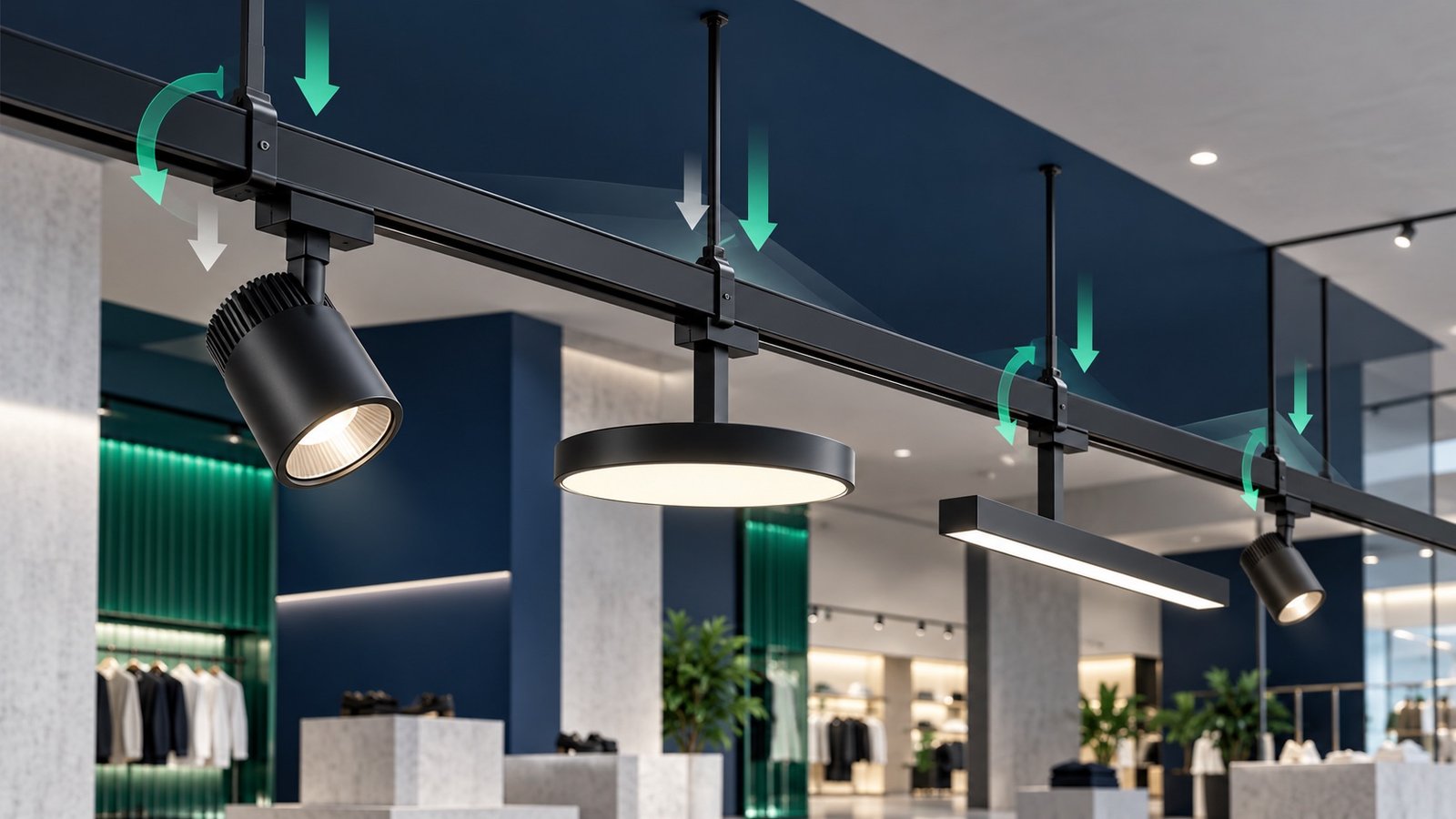
Identify the existing rail as a system
Begin by recording the rail manufacturer and exact series. Photograph its profile, label, power feed, end caps, joints and supports. If the markings are hidden, ask the building owner for drawings or maintenance records. An adapter that seems to slide into a rail is not proof that it locks, contacts and carries load as intended. Different track families and versions may look similar while using different mechanical and electrical interfaces.
List the rail length, support locations, feed type and present fixture positions. Note whether it is surface-mounted, suspended or recessed. Look for obvious damage: bent sections, loose joints, missing end stops, corrosion, cracked ceiling surfaces or improvised fixings. A new fixture should not be used to “test” a questionable installation.
Count all the loads, not only one fixture
A fixture’s published mass is the starting point. Add accessories such as an external driver box, decorative shade, sign holder or secondary attachment if the rail system carries them. Consider the total load on a rail span and the concentration around a support. A row of identical spotlights can place more demand on one section than expected if merchandising changes move several units together.
Long track panels and dual-panel luminaires can create a different moment than compact cylindrical heads because their mass is distributed farther from the adapter. Tilt and rotation may shift the center of gravity. The adapter must be appropriate for the luminaire design, not merely electrically compatible. Ask the luminaire supplier for finished-product mass, center-of-gravity considerations where relevant and an approved adapter assembly.
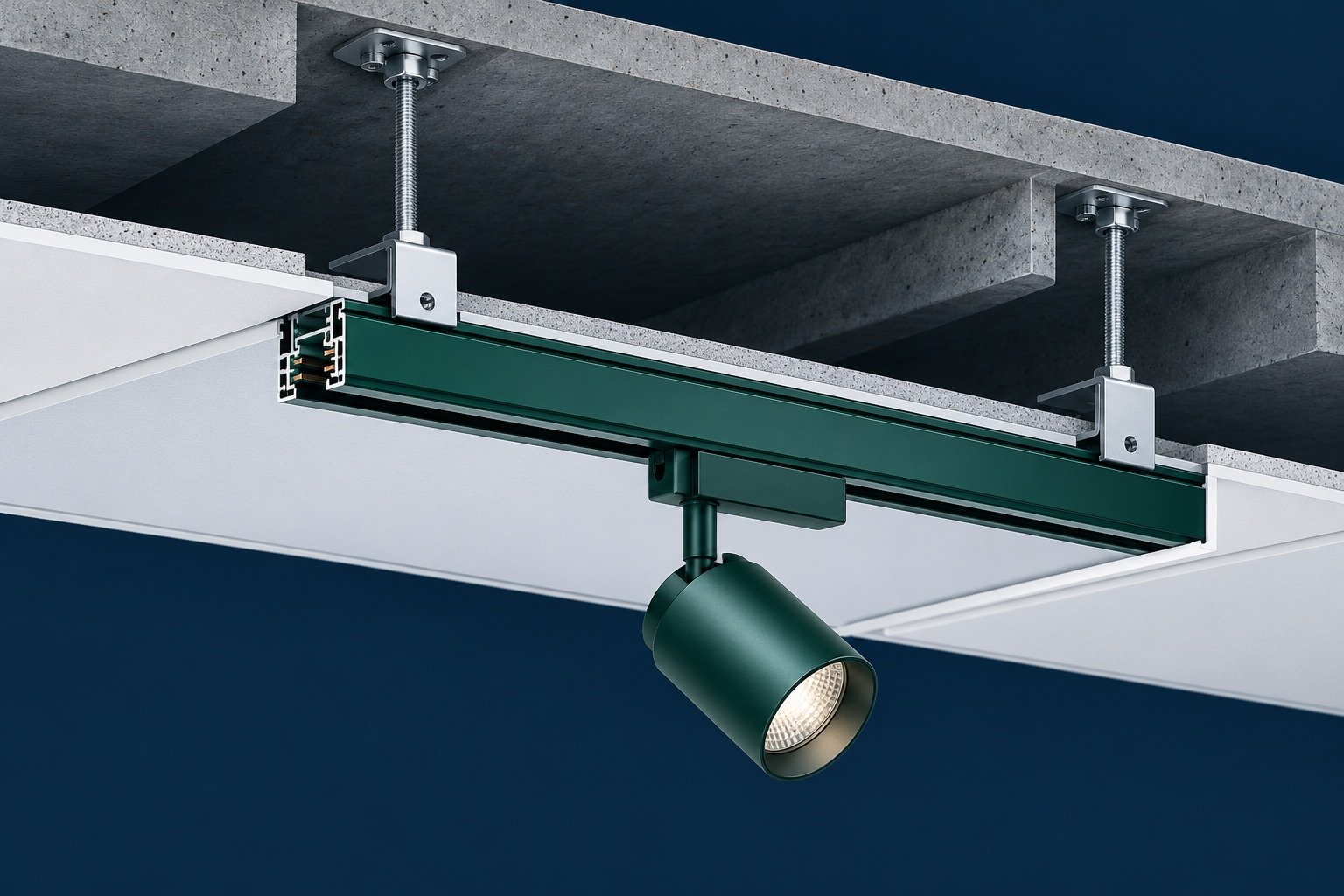
Check where the load goes
The load path runs from luminaire to adapter, from adapter to rail, from rail to support and from support into building structure. A strong fixture cannot compensate for weak ceiling anchors. Suspended track adds hangers, cables or stems; surface-mounted track adds fasteners and substrate questions; recessed track depends on the ceiling system and any dedicated support. Determine which component actually carries the weight.
Ask for the track manufacturer’s current installation instructions and the ceiling contractor’s details. Verify whether supports are attached to structural material rather than to decorative ceiling panels alone. Check joint support and end conditions. Some systems require support near feeds or connectors; others have different instructions. Never substitute a generic “every X metres” rule for the approved system documentation.
Review electrical compatibility separately
Even if the mechanical checks pass, the electrical interface may not. Confirm rail circuit arrangement, voltage, earthing, adapter type, current limits and control method. A replacement luminaire may require a compatible phase selection, dimming signal or driver arrangement. An adapter from another brand should be accepted only if the relevant manufacturers document compatibility for that pairing.
For older tracks, inspect contact wear and heat marks before adding new loads. Verify the circuit capacity and protective devices under the applicable electrical design. This article focuses on mechanical diligence, but mechanical and electrical approval must be completed together before energizing a retrofit.
Survey the installation before ordering
A useful survey pack includes plan and elevation photos, rail label, support locations, ceiling construction, existing fixture count and weights, proposed fixture count and weights, and any planned relocation. Mark where customers or staff might touch or strike low-mounted fixtures. Note vibration from nearby equipment or doors if relevant. If the rail is above a public area, use particular care with fixing integrity and any secondary restraint required by the project.
Then ask the track supplier or qualified installer to review the proposed arrangement against the actual system ratings. If the existing rail cannot be identified, cannot be verified or is damaged, plan a new approved track installation instead of relying on assumptions. The additional installation cost is easier to manage during design than after hundreds of luminaires arrive.
Build a pilot with the heaviest configuration
A mock-up should use the actual proposed luminaire and adapter, not a lighter showroom sample. Test the full aiming range and confirm that the head stays in position without causing the rail to twist, sag or move. This is a functional visual check, not a substitute for structural verification. Record any installer observations and photograph the final orientation.
Where fixtures will be re-aimed regularly, consider the repeated handling loads and accessibility. A store with seasonal displays may move spotlights far more often than a fixed gallery. The maintenance plan should tell staff which parts may be adjusted and which support or wiring components must remain untouched.
Specify the retrofit as one coordinated package
Purchase documents should identify the approved rail/adapter pairing, fixture mass, finish, circuit and control configuration. Include any required suspension or surface-mount hardware rather than leaving it to field substitution. State who verifies the existing structure and who signs off the final installation. If a fixture substitution is proposed, repeat the load and interface checks; “same wattage” says nothing about mechanical equivalence.
Lowcarbon’s commercial LED product center presents track panels and COB spotlights as different platforms. For a retrofit quote, send the existing track maker/model, ceiling photos, proposed quantity and installation height through the project inquiry form. If you are planning a new store rather than reusing old rails, the homepage also outlines project and OEM/ODM support.
Pre-purchase checklist
- Existing track manufacturer, model and current installation instructions identified.
- Rail, joints, feed and supports inspected for damage or alteration.
- Proposed fixture and accessory mass documented.
- Support locations and ceiling structure reviewed by the responsible professional.
- Adapter compatibility confirmed for electrical and mechanical use.
- Load distribution checked for the proposed layout, including future repositioning.
- One full-weight sample installed and aimed in a controlled pilot.
- Approval and maintenance responsibilities written into the project record.
Questions for the site survey
Ask who installed the track and whether the as-built record matches what is on site. Has the ceiling been altered since installation? Have signs or other objects been hung from the lighting rail? Are any support points concealed above a new ceiling finish? Does the track move when an existing fixture is adjusted? These questions can reveal undocumented changes that a simple visual inspection from the floor misses. The survey should be performed safely by a competent person; do not remove energized covers or pull on fixtures to test them.
Record the worst-case proposed arrangement, not only the average layout. A store may initially spread spotlights evenly, then move them toward a promotion. If the system does not permit that concentration, mark approved fixture positions or plan additional support. Future flexibility is a design requirement that should be assessed before the client is promised a fully reconfigurable ceiling.
Why geometry matters as well as weight
Two fixtures with the same mass can load the interface differently. A compact cylinder close to the rail produces a different turning effect from a long panel with its center of mass offset. Adjustable heads add positions where the center of gravity changes. This does not mean one is unsafe; it means the adapter, rail and suspension should be evaluated as an assembly in the intended operating range. Ask whether the luminaire manufacturer has installation guidance for the proposed rail pairing and whether any locking or restraint features are required.
Consider what happens during maintenance. Staff may grip the fixture body while aiming it, accidentally applying force through the adapter and rail. An easily adjusted luminaire should have an aiming mechanism that can be operated without stressing a questionable ceiling connection. Include access and handling instructions in the installer handover.
When replacement track is the better project decision
Replacing track can look expensive compared with reusing it, but uncertain compatibility carries costs of its own: survey time, special adapters, limited aiming positions and the risk of rework. If the system is unmarked, damaged or unsupported by current documentation, a new, fully specified rail may provide a clearer approval path. Evaluate the whole cost—including installation disruption and future maintenance—rather than comparing only fixture prices.
A new rail should still be designed for the ceiling and proposed loads. The installer must verify structure, fixings, electrical capacity and any local approvals. Keep its as-built plan and product instructions for the next refurbishment. That documentation becomes an asset when the retailer later changes displays or fixtures.
Document the decision for future merchandisers
After the retrofit, hand over a simple plan that identifies approved fixture types and any limits on their positions. If store teams may move heads, explain how to release and re-engage the adapter and which actions require a qualified electrician. Mark any zones where fixtures must not be concentrated. The maintenance team should know the track make and model, the approved adapter and the date of the last inspection.
This matters because a safe initial layout can be altered gradually. A new display campaign may add signs, cameras or temporary decorative elements that were not part of the original load review. The rail should not become a convenient general-purpose support. A short, understandable handover note helps preserve the assumptions under which the system was approved.
Frequently asked questions
If the adapter fits, is the track compatible?
No. Physical fit does not prove electrical contact, locking performance or mechanical load approval. Check the documentation for the exact pairing.
Can I use the old track’s original support spacing?
Only after comparing the proposed total and concentrated loads with the applicable manufacturer instructions and the actual ceiling structure. A heavier layout may require changes.
Does fixture wattage tell me anything about track load?
Not reliably. Mechanical load depends on mass, geometry and support arrangement. Obtain the finished fixture’s weight and installation details.
Who should approve the ceiling fixing?
A qualified installer or engineer responsible under the local project requirements, using the track and fixing manufacturers’ instructions.
What if I cannot identify the existing rail?
Do not assume compatibility. Obtain the building records or consider replacing it with a documented system that can be verified.
Installation note: this article deliberately gives no universal load or spacing values. Refer to the exact manufacturer instructions; for an example of system-specific track guidance, see Signify track instruction sheets.
