 跳到内容

A long LED linear luminaire can pass every electrical and photometric check at the factory and still fail the project when it arrives. Extruded housings can bend, diffusers can crack, end caps can shift and long cartons can be crushed by handling that would not damage a compact downlight. Because the damage may be subtle, a team sometimes discovers it only after the ceiling is ready for installation.
For importers and project buyers, packaging is part of the product specification. This guide explains how to agree a practical packing method, what to inspect at receipt and how to preserve evidence if a shipment is damaged. It does not promise a universal carton design: the right solution depends on length, weight, optic, shipping route and handling method.
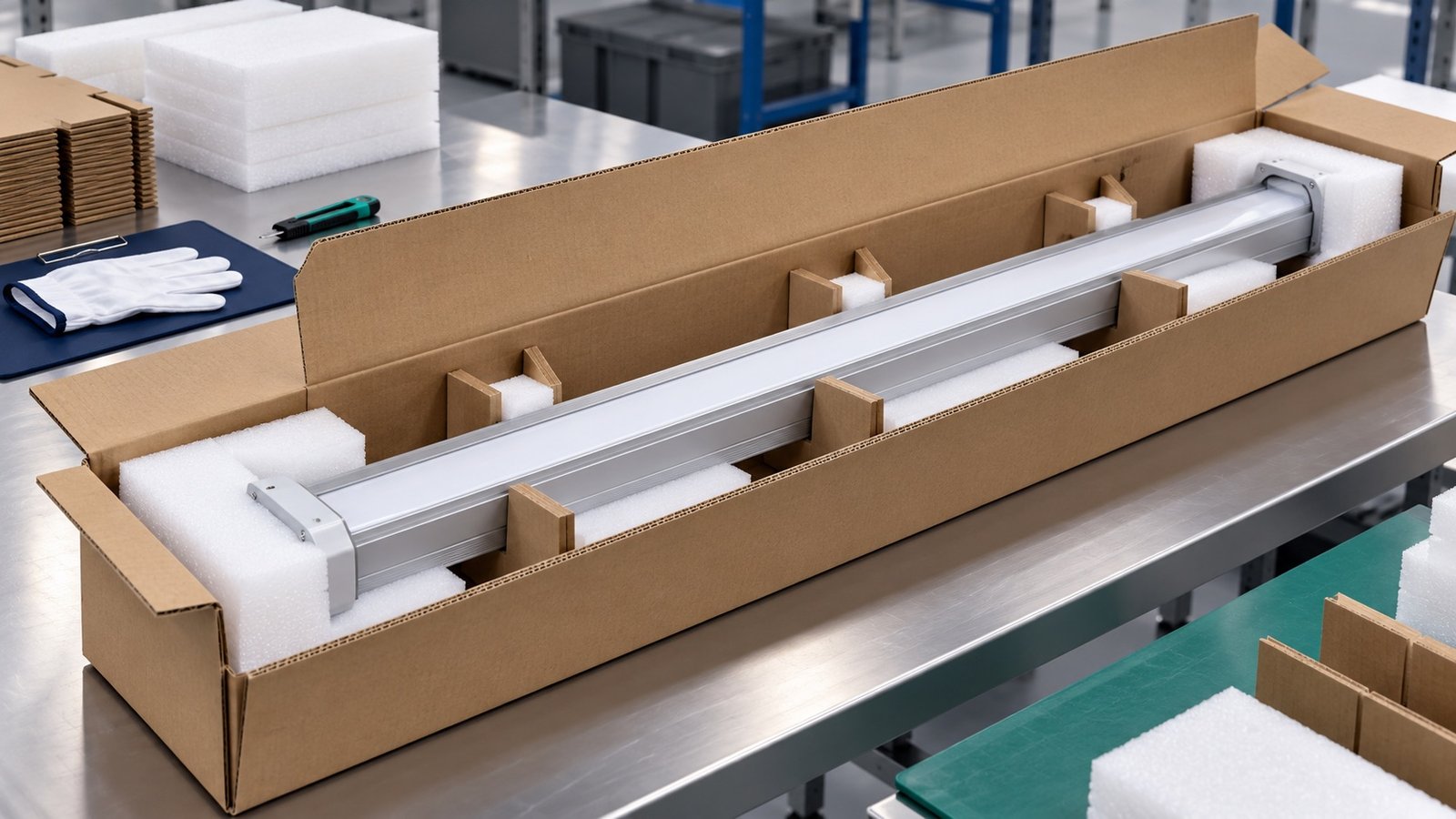
Define the unit that must survive the journey
Start with the final assembled configuration, not a bare aluminum profile. List the housing length, diffuser type, end caps, connectors, suspension hardware and any pre-installed driver. Identify protrusions and pressure-sensitive surfaces. A diffuser face that carries weight inside a carton can be scratched or distorted even if the outside box looks intact.
Agree whether fixtures ship individually, in paired sleeves or in multi-unit master cartons. Record the number of units per carton and the orientation of accessories. A driver or mounting clip loose in the same package can damage the optical face during vibration. Separate sharp hardware, protect exposed connectors and use end support that actually fits the product profile.
Support long products along their length
Long profiles are vulnerable to bending if the carton is supported only at its ends or used as a handle in the middle. Internal supports should limit movement and spread handling forces. The supplier may use shaped foam, corrugated inserts, edge guards or a rigid outer sleeve depending on the fixture. Ask for a photograph or sample of the packed product, not just a statement that “export packing” will be used.
Check how many cartons can be stacked and whether the pallet or crate supports the full length. An overhanging carton invites forklift or strap damage. For sea freight, think about humidity protection and container loading as well as impact. For courier shipments, expect more individual handling and sorting. The packaging method should match the actual route, not a generic factory practice.
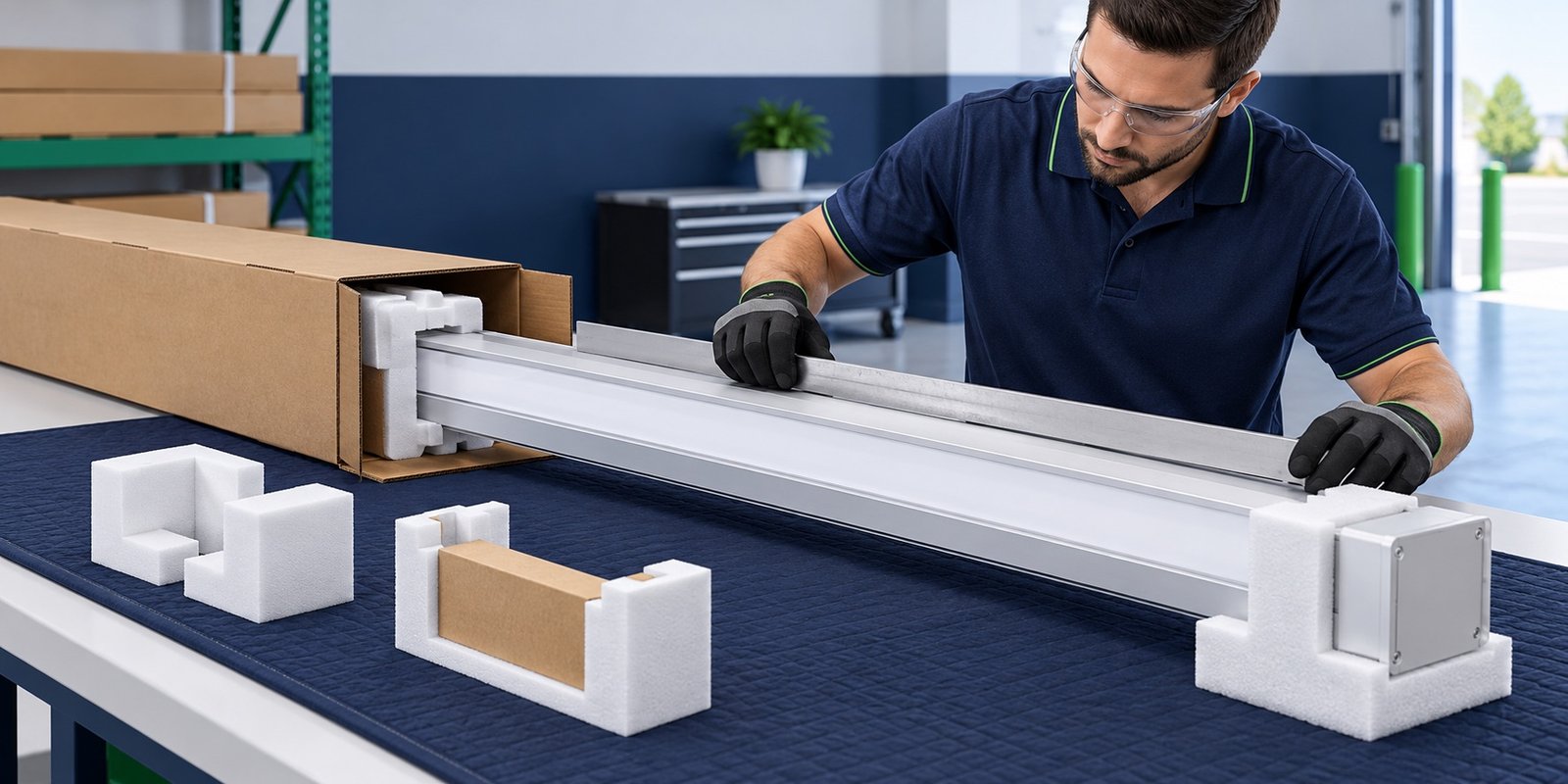
Test the packaging with the real configuration
A packaging trial should use a production-representative fixture, complete with its optic and accessories. The supplier can perform handling, vibration or drop checks appropriate to the selected logistics route and customer requirements. Do not infer that a small sample carton proves the longest product variant is protected. Longer bodies often behave differently under impact.
After a trial, open the package and inspect straightness, diffuser seating, end caps, connector integrity and cosmetic finish. Power the fixture if the inspection procedure allows. Record the trial configuration and any changes to packing materials. If the product length or packaging quantity changes, repeat the review rather than extending an old approval automatically.
Label cartons for receiving and installation
A useful label identifies model, length, CCT, optic, finish, quantity, production lot and destination or room where necessary. Mixed cartons are a source of installation errors; the label must make the configuration easy to distinguish without opening every box. Include handling marks that reflect genuine requirements, but do not rely on arrows or “fragile” text alone to protect a poorly supported fixture.
For a multi-site rollout, align carton labels with the packing list and site schedule. Keep spare parts separated and traceable. If a site needs 1200 mm and 1500 mm runs, use a clear visual code as well as written dimensions. The receiving team should be able to stage the right cartons without guessing from a nearly identical package.
Inspect on arrival before signing away the evidence
At delivery, count packages and photograph obvious tears, crushed corners, wet marks or pallet damage. Follow the carrier’s claim procedure and note visible damage on the delivery record where required. Before discarding cartons, open a representative sample from each configuration and any visibly affected boxes. Inspect the full length under good light, including edges and both end caps.
Check straightness against a suitable reference, confirm diffuser seating and look for scratches, dents or loose components. Test a sample electrically with the correct supply and qualified personnel. If defects appear, record carton ID, lot, model and photographs of both product and packaging. Quarantine affected units so they are not accidentally installed while the cause is reviewed.
Separate transit damage from production defects
A scratched diffuser under intact internal wrapping may have been damaged before packing. A bent profile with a crushed carton may point to transit. Neither assumption should be made without evidence. Compare damaged units with approved samples and undamaged cartons from the same lot. Preserve packaging materials until the supplier, carrier and buyer agree on the investigation.
The goal is not just a claim; it is preventing a repeat shipment with the same vulnerability. A corrective action might change internal supports, pallet layout, carton strength, accessory separation or handling instructions. Record the decision in the next purchase order.
Contract checklist for long luminaires
- State maximum product length and the exact configurations covered.
- Approve a packed sample or packing drawing for each relevant length.
- Define units per carton and how accessories are separated.
- Specify carton and pallet labels that match the installation schedule.
- Agree representative packaging checks for the transport route.
- Set the receiving inspection window and defect-reporting method.
- Retain lot traceability and a reserve of replacement optics or end caps where appropriate.
Lowcarbon’s product center shows linkable and twin-row linear platforms alongside other commercial fixtures. When requesting a quotation through the project inquiry form, include the longest fixture length, shipment destination, delivery schedule and carton-label needs. The manufacturing overview can help frame sample approval and final quality checks.
Match packaging to the way the order will be split
A factory may optimize one full-container shipment, while the project later requires cartons to be separated among several sites. Decide whether each package needs to withstand individual courier handling after arrival at a central warehouse. If a master carton is opened for distribution, the inner pack should still protect each luminaire. Otherwise the first leg of transport may be safe while the final leg causes damage.
Discuss unloading equipment at the destination. A long pallet may not fit a small site lift or doorway. If workers must carry cartons through finished retail areas, consider manageable package weight and length as well as protection. A very strong crate can create a different handling problem if it cannot be opened without risking the diffuser. Ask the receiving team to review a packaging sample before the shipping method is finalized.
Use incoming inspection to find patterns
When defects occur, group them by carton location and lot. Damage concentrated at pallet edges suggests a different cause from identical loose end caps in every box. Photograph a few undamaged packages as well; they show how the intended packing should work. Count the affected percentage and note whether failures are cosmetic, mechanical or functional. This helps the supplier focus corrective action rather than merely sending replacement units.
Inspect the accessories separately. A missing suspension kit can delay installation as effectively as a broken fixture. Compare each carton’s contents against the packing list and approved accessory schedule. If connectors or drivers are packed in a separate box, ensure both boxes carry matching project identifiers.
Decide who owns each checkpoint
The supplier should inspect finished units before packing, verify the packing configuration and keep shipment records. The freight or logistics provider controls many handling steps. The buyer or receiving contractor should inspect packages promptly and preserve evidence. The installer should check each unit before lifting it into the ceiling. Put these responsibilities into the order process so a damaged fixture is not discovered after the claim window or after installation.
For a large rollout, inspect the first shipment more deeply than later repeat shipments. Use what you learn to refine carton labels, accessories and the receiving form. If the product, length or shipping route changes, treat the packaging plan as a new approval rather than assuming the first success covers every future order.
Arrival inspection form: suggested fields
Keep a simple form with delivery date, carrier, pallet count, carton count, model, length, lot, exterior condition, internal packing condition, product condition, functional test result and photographs. Include the name of the inspector and whether the unit was accepted, quarantined or installed. This record is useful for warranty investigation as well as transport claims. It also provides feedback to the supplier on whether the packaging design works in the real distribution chain.
Account for schedule and replacement lead time
Long linear products are often cut or assembled to a project schedule. A damaged unit may not be replaceable from general stock at short notice. Before shipment, agree the response to a small number of damaged units: spare fixtures, replacement diffusers, local repair parts or a fast production slot. The right reserve depends on project size and the consequences of an incomplete run at handover.
Set aside a staging area where arriving cartons can be opened safely without leaning long fixtures against walls or placing them on uneven floors. Train the receiving team to carry and support them as intended. Many defects occur after delivery but before installation, when packages are repeatedly moved around a busy site. A clear receiving and staging plan protects the investment made in factory packing.
Frequently asked questions
Is a thicker carton enough to protect a long light?
Not by itself. Internal movement, support spacing, accessory placement and pallet handling can matter as much as outer board strength.
Should the optical cover ship installed?
That depends on the product design. Ask the supplier to validate the chosen arrangement with the full fixture and the actual route.
What should I photograph if a delivery looks damaged?
Show the pallet, carton label, affected outer surfaces, internal supports and the product defect before disposing of any packing materials.
Can one packaging approval cover every length?
Not automatically. The longest or heaviest configuration may need a separate check because its mechanical behavior differs.
When should I perform incoming inspection?
As soon as practical within the agreed receiving and carrier-claim window, before affected units are installed or cartons discarded.
