 跳到内容
跳到内容 
The SDCM 3 vs SDCM 5 decision matters most when several LED modules are visible together. In a continuous line, a small chromaticity difference can be more noticeable because the eye compares adjacent luminous sections directly. At LCB Light, we therefore discuss initial binning, assembled-luminaire variation and repeat-order control as one subject.
SDCM is often described through MacAdam-step regions around a target chromaticity. A smaller number indicates a tighter permitted region, but the number alone does not guarantee identical appearance in every room, at every dimming level or across years of operation.
What the SDCM number represents
Standard deviation color matching expresses a tolerance region around a target color point. Products within a three-step region are more tightly grouped than products allowed within five steps. The specification is statistical and colorimetric; it does not mean every observer will perceive the same difference or that two batches share the exact same center point.
Always record the target CCT and chromaticity basis used by the supplier. “SDCM≤3” without an identified LED, test stage or batch-control method leaves important questions unanswered.
Why continuous lines reveal variation
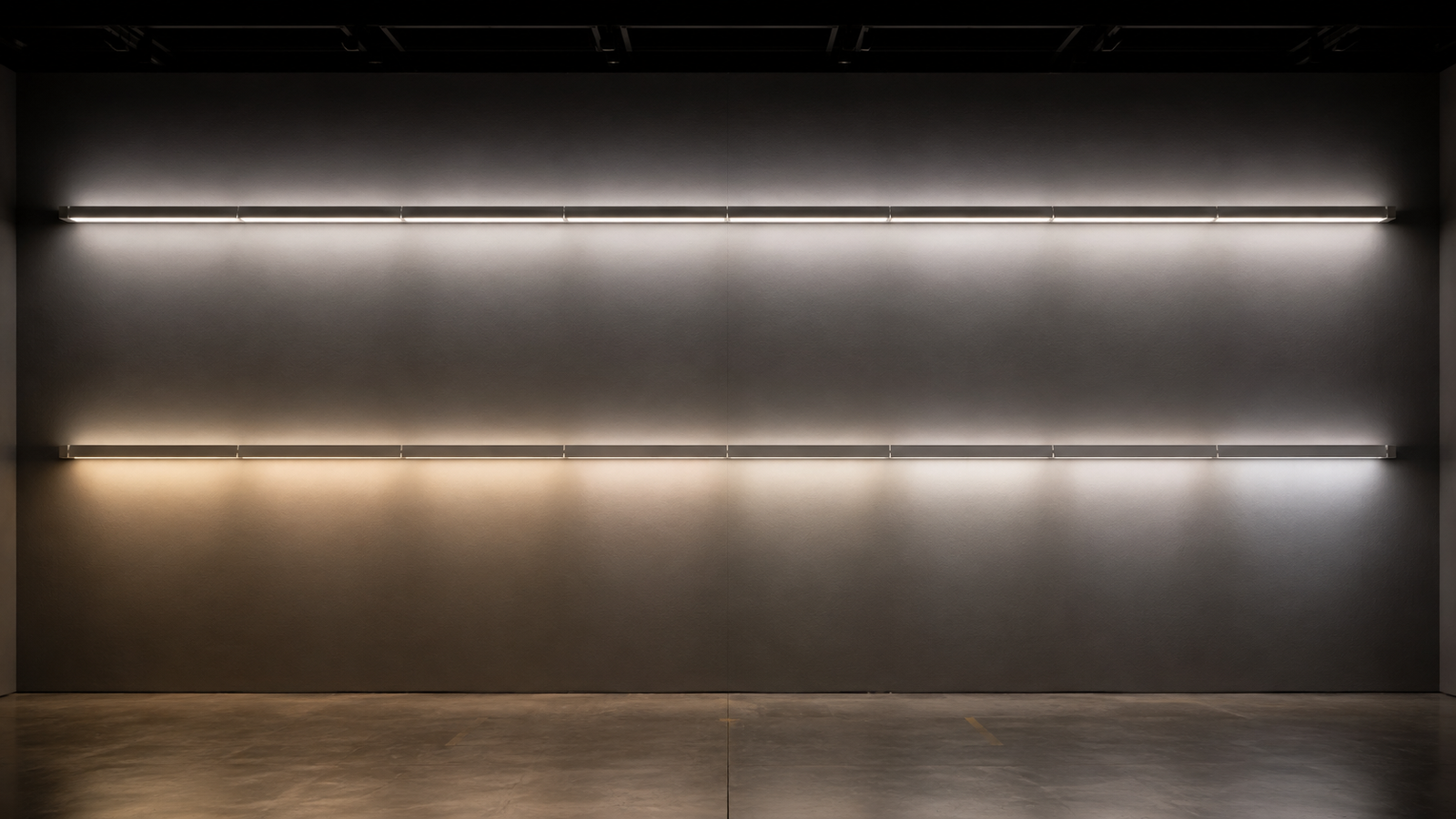
Separate luminaires across a large ceiling may be compared indirectly. In a continuous line, adjacent diffusers create an immediate side-by-side reference. Differences in LED bins, phosphor, current, temperature or diffuser transmission can appear as warmer, cooler, greener or pinker sections.
Joint regions and replacement modules are especially sensitive. A new module may meet the same nominal CCT yet look different beside an aged installation. This is why spare strategy and repeat-order records matter.
When SDCM 3 is worth specifying
A tighter target is valuable for premium offices, galleries, retail displays, hospitality interiors and architectural lines where visual continuity is a design feature. It may also help when luminaires are installed close together on uniform white ceilings. The commercial trade-off can include LED selection, availability, cost and lead time.
Do not request SDCM 3 automatically for every utility space. Define where the tighter tolerance creates visible or brand value, then use appropriate requirements elsewhere.
When SDCM 5 may be acceptable
SDCM 5 may suit warehouses, back-of-house areas, plant rooms or dispersed fixtures where demanding side-by-side color matching is not the primary objective. Surface colors, daylight and mixed sources can dominate perception in these spaces. A wider bin can also improve availability or cost.
Acceptance still requires a controlled target. SDCM 5 should not become permission to mix unrelated CCT centers or visibly different batches within one continuous run.
LED binning is only the beginning
The complete luminaire can shift the perceived or measured result. LED operating temperature, current, optic, diffuser and internal reflections influence output. Dimming methods can also cause small color changes. Ask whether the stated SDCM applies to the LED package at purchase, the assembled luminaire at production, or both.
For color selection more broadly, see our LED linear light color-temperature guide. CCT, chromaticity tolerance and color rendering solve different parts of the specification.
How to control repeat orders
Keep the LED brand, part number, bin code, CCT target, production date and approved sample reference. Define a change-notification process if the LED package or phosphor family changes. For phased projects, reserve material from one controlled lot where practical or approve a transition plan.
At LCB Light, we recommend producing modules for one visible continuous run from the same controlled batch. If a replacement is required later, compare the new section beside an existing sample or installed reference before changing a prominent area.
A useful incoming and pre-shipment check
- Warm all comparison samples for a consistent period.
- Use the same driver setting, diffuser and ambient condition.
- Measure chromaticity with calibrated equipment at defined points.
- Compare adjacent sections visually in a neutral environment.
- Record the instrument, method, target and tolerance.
- Keep one approved sample or measurement report for repeat production.
A phone photograph can exaggerate or hide small differences because of automatic white balance. Use it for documentation, not as the only acceptance method.
Illustrative phased-project example
A retailer installs a continuous white line in 20 stores during Phase 1 and plans another 30 stores six months later. If the RFQ says only “4000K,” the second order may use another LED family or a different bin center while still meeting the nominal CCT. Each store may look acceptable alone, but adjacent replacement modules or shared photography can reveal inconsistency.
A better specification records the target chromaticity, SDCM tolerance, LED identity, complete-luminaire test method and change-notification rule. For highly visible runs, reserve spares from the original batch. For Phase 2, compare a new production-intent sample with the retained reference before release.
Do not confuse initial tolerance with color maintenance
Initial SDCM describes grouping at a defined time. Color can shift during life because of LED, phosphor, temperature and optical-material aging. A tightly binned new product can still drift if thermal design is poor. Ask for relevant maintenance evidence and keep operating temperature within the approved range.
When an old section is replaced, the closest new chromaticity may not match the aged appearance. For critical interiors, replace a visually coherent group or use retained spares rather than mixing one new module in the center of a long line.
How current and dimming influence comparison
Measure and inspect samples at the specified operating current and after thermal stabilization. If the project spends substantial time dimmed, compare at representative levels. Different drivers or current settings can move the LED operating point. The effect may be small, but a continuous adjacent line makes small differences easier to see.
Build color consistency into inspection
Define how many units or modules are measured, where, after what warm-up and with which instrument. Record x/y or u′/v′ coordinates rather than only pass/fail words when traceability matters. Plotting results can reveal a batch drifting toward one edge even while individual points remain inside the limit.
At LCB Light, we combine instrument data with a controlled visual comparison because the buyer ultimately experiences an assembled luminous line. The inspection reference should use the intended diffuser and driver, not bare LED boards viewed in unrelated conditions.
Commercial trade-off and supplier discussion
Tighter bins can affect cost, lead time and component availability. Ask the supplier to quote the impact and suggest where SDCM 3 creates real value. A transparent proposal may use a tighter tolerance in public architectural zones and a broader one in concealed or industrial areas. The buyer then pays for consistency where people will notice it.
Suggested specification structure
State the nominal CCT, maximum initial SDCM, test stage, warm-up, complete-luminaire configuration and batch rule. Add a requirement that modules within one visible continuous run use a controlled lot. For phased work, state how later production will be compared with the retained reference and whether spare modules from the original batch are required.
Keep color rendering requirements in separate fields so CRI, fidelity or gamut targets are not confused with chromaticity tolerance. If the supplier proposes another LED package, request its color, efficacy, thermal and lifetime impact. This structure makes the specification measurable while leaving room for an engineering alternative that is properly reviewed.
Turn the technical finding into a purchasing decision
A useful specification states the application, exact luminaire configuration, operating conditions, required evidence and acceptance method. At LCB Light, we encourage buyers to separate mandatory performance from preferences and to approve one production-intent sample. That makes quotations comparable and gives production inspectors a clear reference.
Keep the approved product code, drawing, driver, optic, test file and finish in one project package. If any of those items changes, review the effect before shipment. This simple change-control step protects the result more effectively than adding more marketing adjectives to the purchase order.
Our recommendation for buyers
Use SDCM 3 where adjacent appearance is commercially important and define exactly how it will be verified. For less sensitive areas, a wider tolerance may be reasonable, but keep one CCT center and controlled production batch. At LCB Light, we can discuss the visible layout, order phases and replacement strategy before quotation so the color-consistency requirement is practical rather than a line copied from another specification.
The strongest approval package combines the numerical target, production-intent sample, LED identification and repeat-order rule. That package protects the appearance of the light line long after the first shipment.
Frequently asked questions
Is SDCM 3 visibly identical?
Not always. It is a tighter tolerance region, not a promise of zero perceptible difference under every condition. Adjacent comparison and complete-luminaire control still matter.
Does high CRI mean tight color consistency?
No. CRI describes color rendering, while SDCM describes chromaticity variation around a target. Specify both when the project needs both.
Can a replacement match a line installed years earlier?
It can be difficult because LEDs and optical materials may age. Keep spares from the original batch for critical areas and compare later replacements before installation.
Discuss Your LED Linear Lighting Project
Share your layout, mounting height, target light level, optic, control and destination-market requirements. The LCB Light team can help you prepare a project-specific configuration and sample plan.

