 跳到内容

A retail chain can approve a light in one pilot store and still encounter a color mismatch in the next shipment. One aisle appears slightly warmer, a replacement spotlight looks greener, or a new linear run no longer matches the existing installation. These problems are rarely solved by saying “all the fixtures are 3000 K.” Correlated color temperature is a useful label, but it does not fully describe how closely individual luminaires match one another.
For multi-site buyers, color consistency is a purchasing and change-control issue as much as a lighting issue. The right questions concern LED binning, finished-luminaire testing, optics, driver settings, reference samples and future replacement stock. This guide shows how to build those questions into an OEM/ODM brief without pretending that one number can guarantee a perfect visual match in every room.

Color consistency is not the same as color stability
Consistency describes variation between units of the same product. Stability describes how one product’s chromaticity changes over time. The distinction matters when investigating a complaint. If a new batch looks different immediately, compare the new and old production specifications and measurements. If installed units gradually shift, operating temperature, component aging and the environment may be relevant. The U.S. Department of Energy makes this same distinction in its guidance on LED color stability.
A project can also have excellent component-level binning but poor luminaire-level appearance if different optics, diffusers, drive currents or housing finishes are mixed. Approve the assembled fixture as the visible system, not only the LED package listed on a supplier sheet.
What binning and SDCM can tell you
LED packages are sorted into groups, commonly called bins, based on measured characteristics. Suppliers may use bin codes to control luminous output and chromaticity. SDCM, or standard deviation of color matching, is often used to describe a chromaticity tolerance region. A smaller stated step generally indicates a tighter region, but it does not describe every aspect of visual appearance and should not be interpreted as a universal “you will never notice a difference” guarantee.
Ask whether the SDCM claim is for individual LED packages, modules or finished luminaires, and under what conditions it was measured. These are different scopes. A buyer comparing quotations should not treat “3-step LEDs” and “finished fixtures maintained within a 3-step target” as equivalent statements. It is also useful to ask how the supplier handles the direction of variation: units on opposite sides of a nominal region may look different when installed side by side.
Write the visible target into the project brief
Start with the application. Adjacent fixtures on a bright white retail ceiling make differences easy to see. A track spotlight illuminating separate displays may be more forgiving than a continuous row of linear luminaires reflecting in a glossy surface. The same customer may therefore choose different acceptance methods for a flagship store, back-of-house area and industrial aisle.
Define the nominal CCT, allowed chromaticity tolerance, color-rendering target, output setting and optic. State whether fixtures from different production batches must be interchangeable within one visible run. If so, preserve an approved physical reference and agree how replacement units will be checked. Where possible, approve one assembled luminaire and compare later samples against it under controlled conditions rather than against a phone photograph.
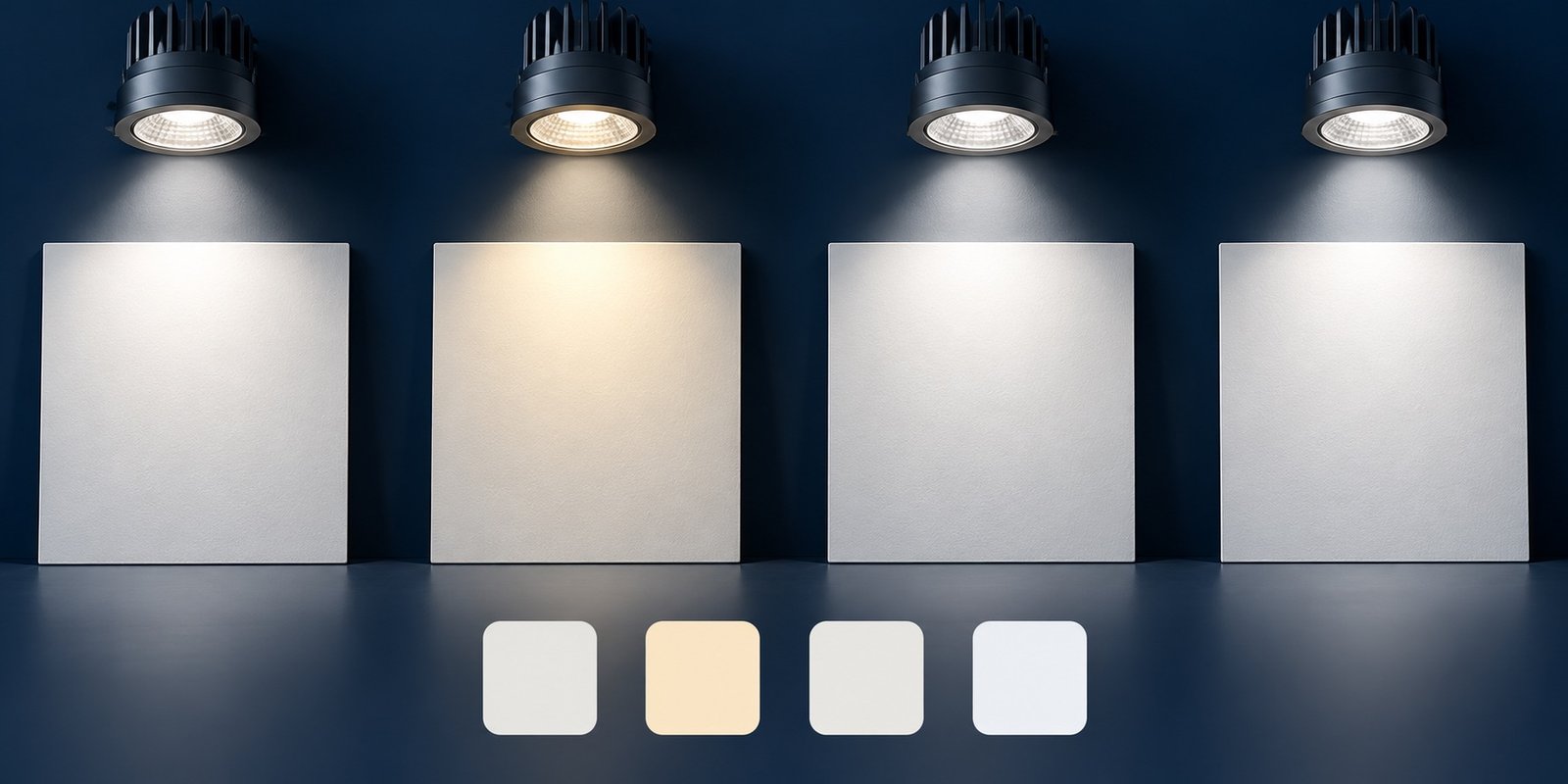
Use a golden sample and a documented viewing setup
Choose a signed-off sample with its exact model, optic, LED selection, driver and switch settings recorded. Store the sample so it remains protected and identifiable. For visual checks, compare units at the same output, after a consistent warm-up period, against a consistent neutral surface and with surrounding light controlled. A comparison under daylight in one office and under warm decorative lighting in another may produce conflicting judgments.
Measurement can support the visual check, but a number should be tied to a method. Specify who measures, which instrument is used, whether the measurement concerns the source or finished fixture, and which operating point is tested. A supplier’s incoming LED bin record, finished-unit QC record and approved sample comparison each answer a different question. Together they are more useful than one line of marketing copy.
Consider optics and surrounding materials
Diffusers, reflectors and lenses can affect perceived color or reveal spatial color variation. A very wide beam mixing multiple LEDs may look different from a tight COB spotlight even when the nominal CCT is the same. White housing paint, reflective ceiling tiles, wood shelving and colored merchandise also change the visible result. This is why a store mock-up should include the real materials and viewing angles where possible.
Do not isolate color consistency from brightness and beam shape. A dimmer fixture may look visually warmer to an observer even when the measured chromaticity is similar. Two different optics may light a white panel unevenly and create an apparent color difference. Check the full visual scene before assuming the LED bin is the sole cause.
Plan reorders before the first rollout
A multi-site program may install hundreds of fixtures over several months, then need replacement stock years later. Ask whether the supplier can reserve or identify the LED bin and critical components used for the approved run. Components can become unavailable, so a realistic agreement should include a substitution notification process rather than an impossible promise that no component will ever change.
Keep a small controlled spare pool where the project economics justify it. Label spares by location, model, CCT, optic, driver setting and production lot. If the supplier must change LEDs or a diffuser, obtain a new sample and compare it beside both an unused reference and an aged installed fixture. The goal is to understand the practical difference before ordering a large replacement batch.
Questions to put to an OEM/ODM supplier
- Is the color tolerance quoted for LED packages, modules or complete luminaires?
- Which bin codes, LED maker and production lot are tied to the approved sample?
- What is the control plan for a later batch or replacement order?
- Are the optic, diffuser, driver current and CCT switch positions fixed?
- What measurement and visual comparison methods are used at final inspection?
- How will a proposed component substitution be reported and approved?
These questions are most effective when attached to a real model. Browse Lowcarbon’s track, linear and downlight product families to identify the likely platform, then send the number of stores, timeline and expected replacement horizon through the project inquiry form. The company’s manufacturing overview also explains the sample-approval and production coordination approach.
A practical acceptance sequence
First, shortlist the luminaire using application, photometric and installation criteria. Second, agree a color target and sample. Third, test a pilot installation with several adjacent units, not only one fixture on a desk. Fourth, photograph and record the approved setting and fixture labels. Fifth, require a pre-production confirmation if a critical component changes. Finally, perform an incoming comparison on the first shipment and any later production lot.
This sequence is more robust than attempting to solve the entire issue with a single SDCM line. It also gives a buyer a traceable answer if a site later reports mismatch: which batch, which setting, which approved reference and which visible conditions were involved?
Investigating a reported color mismatch
When a store reports a mismatched fixture, first identify what is being compared. Is it one new replacement beside older units, a whole shipment in a new store, or a few heads within the same lot? Collect model labels, production lots, switch settings, installation dates and photographs under controlled exposure. Check whether the fixtures use the same diffuser and whether the controls are commanding the same output. A remote diagnosis based on a single automatic phone photo is unreliable because cameras adjust white balance and exposure.
Next, compare the suspect unit with a retained approved sample and an undamaged unit from the same shipment under a consistent viewing setup. If a calibrated measurement is required, agree the method and instrument with the supplier. Distinguish a genuine chromaticity difference from unequal brightness, dirty optics, reflective surroundings or aging. Once the cause is known, define the scope of corrective action: replacing one unit, re-aiming a section, matching a batch, or changing a component specification.
How to avoid a misleading specification
A phrase such as “3000 K, CRI 90, 3 SDCM” is useful but incomplete. It does not tell the supplier whether the tolerance applies at the package or luminaire level, whether a replacement must match installed stock, what test conditions are used, or who decides visual acceptance. Add those details in plain language. For example: “Finished luminaires within the same visible row should be compared side by side against the approved reference at the final output setting before dispatch.” The exact measurable limits can then be set with the lighting consultant and supplier.
Keep color rendering separate from color matching. A high CRI or TM-30 value says something about how object colors appear under a source; it does not prove two luminaires will look identical in white point. Conversely, a tightly matched set could have poor color rendering for the merchandise. Ask for both types of evidence where the application demands them.
Practical rollout documentation
For each store, retain a fixture schedule with model, lot and setting. Record which store received which shipment and preserve a spare pool by compatible batch where feasible. If stores open in waves, ask the supplier to flag any LED or optic changes between waves. A short change notice before shipment is much easier to handle than an unexplained difference after installation. Include an escalation path for site staff: what to photograph, which labels to read and who has authority to approve a replacement.
This process is especially valuable when ambient and accent fixtures come from different product families. Compare them in the combined scene, then decide whether a slight difference is intentional—perhaps warmer accent light on merchandise—or an error. Document that intent so a future maintenance team does not “correct” a deliberate design choice.
Frequently asked questions
Does the same 3000 K label mean two fixtures will match?
No. CCT is a broad descriptor. Chromaticity tolerance, optics, operating condition and surrounding materials can still create visible differences.
Is lower SDCM always worth paying for?
It depends on the application. Side-by-side luminaires in a flagship environment may justify tighter control; separated utility fixtures may not. Compare the finished product and project requirements.
Can I match new lights perfectly to fixtures installed years ago?
Not necessarily. Existing fixtures may have aged. Compare real samples on site and decide an acceptable replacement strategy before ordering.
Should I approve only the LED chip bin?
No. Approve the assembled luminaire, including optic, diffuser, driver setting and visible finish.
What record matters most for future reorders?
Keep the signed sample reference, full SKU configuration, component/batch record, visual acceptance method and agreed change-notification process together.
Reference: U.S. Department of Energy, LED Color Stability. Project-specific tolerances should be agreed with the lighting designer and supplier.
