 跳到内容
跳到内容 
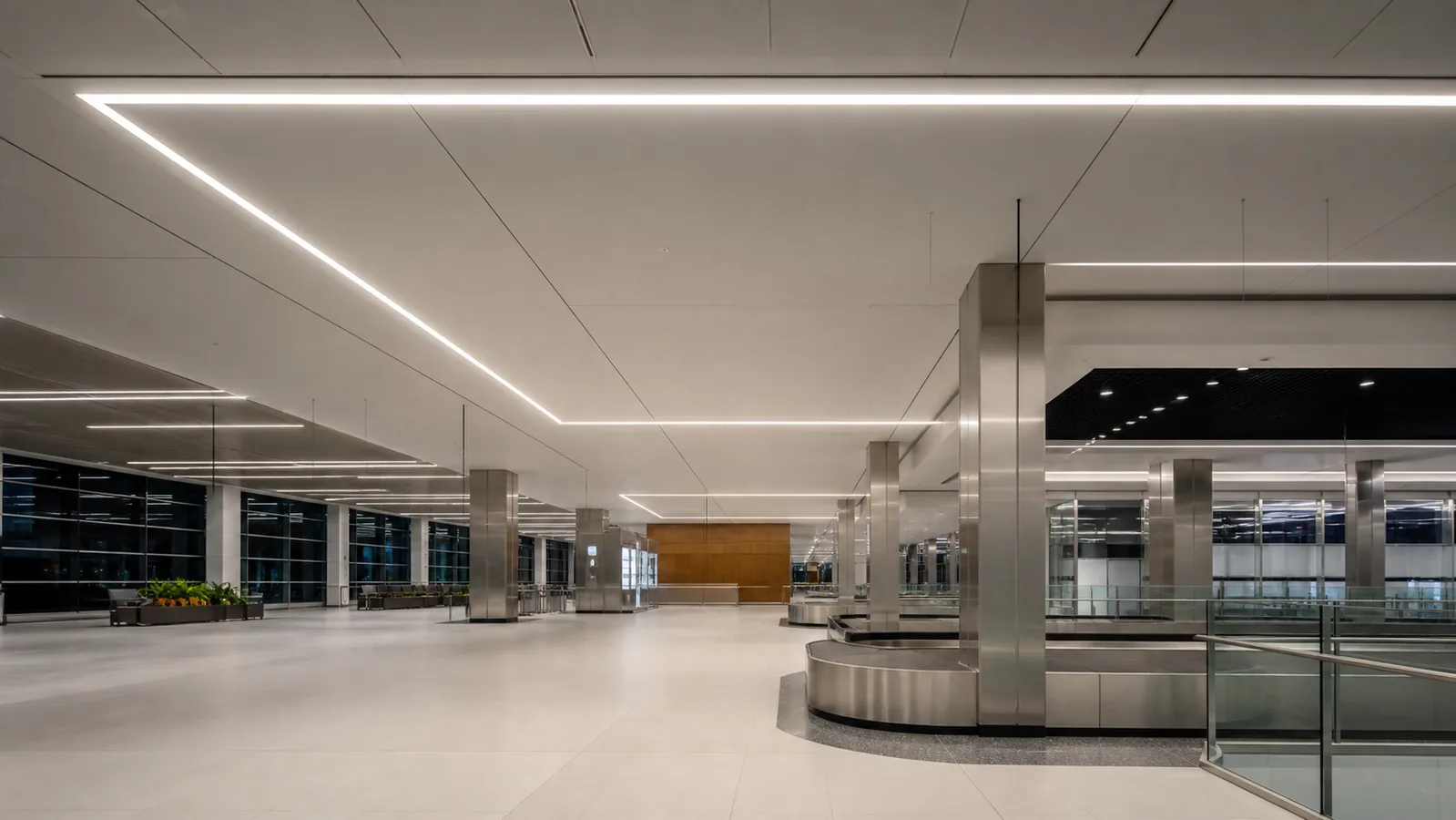
When LCB Light reviews a continuous-run inquiry, we treat the complete line as one coordinated system rather than a collection of individual fixtures. Overall dimensions, joints, feeds, controls and packaging all influence whether the installation will look straight and operate correctly. This guide presents the coordination process we recommend before production.
A continuous-run LED linear lighting system creates uninterrupted lines for offices, retail spaces, schools and public interiors. The visual idea is simple, but the installed system depends on accurate coordination between architecture, lighting calculations, electrical feeds and mechanical connections.
Translate the design line into buildable modules
Start with the desired overall length and shape. Then map standard modules, illuminated connectors, blank sections, end caps and expansion allowances. Distinguish body length from luminous length. If the line must align with walls, desks or ceiling grids, show those reference dimensions on the shop drawing.
Plan straight runs, corners and intersections
L-, T- and X-connectors can be luminous or non-luminous. Their appearance and photometric behavior should be approved before ordering. Custom angles may require special fabrication and longer lead times. Repeated shapes should use one controlled drawing to avoid small differences across rooms.
Coordinate feeds and circuit capacity
Calculate total wattage per circuit and confirm the system’s maximum electrical run. Long lines may require multiple power feeds even when they look continuous. Mark feed direction, driver locations, dimming zones, emergency sections and access points. Control wiring requirements differ between DALI, 0–10V and other systems.
Choose distribution and output
A continuous line can use diffuse, low-glare, wall-wash, asymmetric or louvered optics. Select output using a room calculation, then check uniformity and vertical illumination—not only average lux. If the line crosses different functional areas, separate output or control zones may be preferable.
Resolve suspension and alignment
- Confirm structural support and suspension intervals.
- Coordinate ceiling penetrations and cable colors.
- Allow field adjustment for leveling.
- Check joint strength and visible seams.
- Provide access to drivers and emergency components.
For differences between suspended, recessed and surface installations, see our linear-light mounting comparison.
Approve a representative mock-up
A short mock-up should include a real joint, diffuser seam, suspension set, power feed and dimming control. Review it from normal viewing angles. For large projects, a pilot installation can validate assembly time, alignment and packaging sequence before full production.
Prepare a complete submittal package
The submittal should include a dimensioned layout, module schedule, reflected ceiling coordination, feed diagram, circuit and control zoning, suspension details, product codes and finish references. Number repeated runs so that factory labels and site packaging can follow the installation sequence. This is especially useful when lines vary by only a small amount.
Before shipment, confirm how diffusers are packed and identified. Long optical parts can be damaged or mixed between runs, and replacement sections may show a slight visual difference if material batches change.
Assign one revision status to the entire LED linear lighting system package. A changed ceiling dimension may affect modules, feeds, suspension and packaging simultaneously, so isolated drawing updates should be avoided. Record final field dimensions before factory cutting or assembly begins.
How we break a long light line into production modules
We begin with the finished architectural dimension, then subtract or allocate end caps, corners and connector allowances. Standard module sizes are arranged to minimize special parts while keeping joint positions visually acceptable. Each run receives an identification number that can follow drawings, labels and packaging. This process is especially important when several corridors or rooms differ by only a few centimeters.
Why electrical planning belongs in the same drawing
A continuous line may look like one fixture, but it can contain multiple drivers, feeds, emergency sections and control zones. At LCB Light, we recommend showing them on the run drawing rather than leaving the electrician to decide on site. We check total load, conductor arrangement and the maximum supported run for the selected system. When several feeds are required, their visible cables or canopies should be coordinated with the architecture.
What we recommend testing before volume production
A representative mock-up should include at least two modules, a joint, the actual diffuser or louver, one power feed and the proposed control gear. Install it at the planned height. Review alignment, seam visibility, color consistency, dimming and the time needed to assemble the connection. A table-top sample can confirm materials, but it cannot reveal every installation issue.
Packaging is part of the system design
Long profiles, diffusers and small connectors can be damaged or mixed during transport. We recommend packaging by run or zone and identifying every carton against the schedule. Critical small parts should be grouped and counted. For complex projects, a packing map can save significant site time because installers do not need to open every carton to find one connector.
Commercial decisions that affect the design
- Use of standard versus custom module lengths
- Quantity of special corners and non-luminous blanks
- Number of control and emergency zones
- Finish and cable-color requirements
- Need for factory pre-assembly or site adjustment
At LCB Light, we discuss these decisions early so the visual result and budget develop together. If you send us the overall dimensions and reflected ceiling plan, we can help identify the information needed for a buildable quotation and production drawing.
The best time to contact the manufacturer
Contact us before every feed and joint has been fixed in the construction drawing. Early review gives us room to suggest standard modules, practical feed positions and packaging groups while protecting the architectural intent. At LCB Light, we can work from a dimensioned plan and target performance to identify the decisions needed for a reliable quotation. Waiting until installation begins usually leaves fewer economical options.
An illustrative run-planning example
Suppose an architect wants a 12.4-meter suspended line with one 90-degree corner and two control zones. We would first confirm whether 12.4 meters refers to the outside body dimension or the luminous line. Then we would arrange standard modules, corner allowance and end caps, identify joint positions and locate power feeds. The two zones could require separate driver groups even though the line looks continuous.
The resulting schedule should show every module in order. At LCB Light, we also recommend identifying which cartons belong to that run. When installers can follow a numbered sequence, site assembly becomes faster and the chance of placing a special module in the wrong location is reduced.
Design for real site tolerances
Architectural drawings and field dimensions do not always match perfectly. Very long recessed lines are especially sensitive because ceiling openings can be difficult to change. We recommend confirming critical dimensions after the surrounding construction is sufficiently complete. Where possible, use system details that allow limited adjustment at end points or suspension positions.
Custom cutting should never become an unplanned site solution. It may affect wiring, optics, finish and compliance. We prefer to identify the permitted adjustment range in the shop drawing and explain which changes require factory review.
Commissioning, spares and handover
Test every control zone, dimming command and emergency section. Inspect the line from its longest viewing angle because small alignment differences become more visible over distance. Keep spare connectors, end pieces and optical parts in clearly labeled packaging. Record driver access points and addresses where a digital control system is used.
A continuous-run project is commercially successful when the delivered system matches the architectural dimension, installs in a logical sequence and can be maintained without guessing. This is why we include coordination and documentation in the value of the product. Buyers should compare that complete support—not only a price per linear meter.
Where buyers gain the most value
The greatest savings usually come from coordination before production, not from removing a small component after the design is fixed. Standardizing modules, resolving feed positions and packaging by run can reduce factory and site complexity together. At LCB Light, we use early drawings to find these opportunities while there is still time to act.
When you compare continuous-line suppliers, ask who will convert the concept into the final module schedule and how revisions will be controlled. That service is part of the system’s commercial value because it directly affects installation time, appearance and the risk of missing parts.
Frequently asked questions
Can continuous light lines be cut on site?
Some systems permit limited field adjustment, while others require factory-defined modules. Follow the manufacturer’s system instructions; uncontrolled cutting can affect optics, wiring and compliance.
Will diffuser seams be invisible?
Not always. Their visibility depends on diffuser material, joint design, output and viewing angle. Approve a physical sample when a seamless appearance is critical.
Discuss Your LED Linear Lighting Project
Share your application, dimensions, target output, optics, controls and installation requirements. The LCB Light team can help evaluate a suitable linear-lighting configuration for your project.

