 跳到内容
跳到内容 
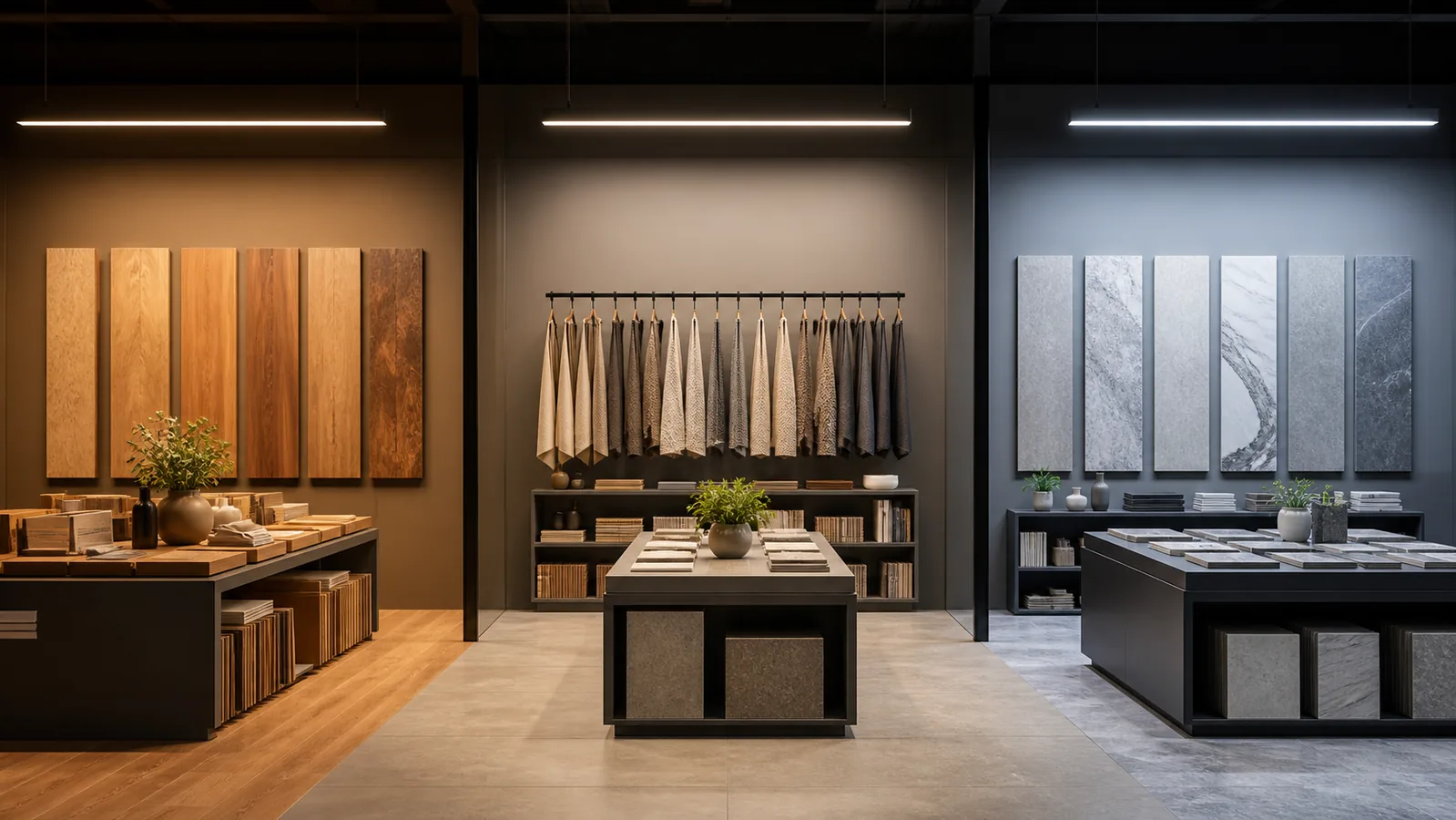
LED linear light color temperature influences atmosphere, material appearance, perceived brightness, and how comfortably a space relates to daylight. The common commercial choices—3000K, 4000K, and 5000K—are all white light, but their visual character differs.
Color temperature should be selected together with CRI, color consistency, illuminance, controls, finishes, and the intended use of the space.
What CCT Means
Correlated color temperature, or CCT, describes whether white light appears warmer or cooler. Lower values look warmer and more yellow; higher values look cooler and more blue. CCT does not measure brightness, efficiency, or color-rendering quality.
Two products with the same CCT can still render colors differently because their spectral power distributions are different.
3000K: Warm and Welcoming
3000K is common in hospitality, restaurants, lounges, residential-style offices, fashion retail, and reception areas. It works well with wood, warm metals, textiles, and earth-tone finishes.
It can create a relaxed atmosphere, but the project should confirm whether the warmer appearance supports detailed tasks and the brand environment.
4000K: Balanced Neutral White
4000K is widely used in offices, classrooms, supermarkets, showrooms, healthcare support areas, and general commercial spaces. It provides a neutral appearance that works with many materials and daylight conditions.
Because it sits between warm and cool options, 4000K is often a practical standard for multi-zone projects where consistency is important.
5000K: Crisp Cool White
5000K is common in warehouses, production spaces, inspection areas, workshops, and some high-visibility retail environments. It can appear crisp and bright, especially at higher illuminance.
Cool light is not automatically better for concentration or accuracy. Visual performance also depends on illuminance, spectrum, contrast, glare, and the task.
Color Rendering and Consistency
CRI provides a familiar indication of color rendering, but more detailed metrics can describe fidelity and saturation. Retail, printing, healthcare, art, and material-selection spaces may need higher color quality than a circulation area.
Also specify color consistency. A tight chromaticity tolerance helps adjacent fixtures and replacement batches look uniform in continuous lines.
Tunable White Options
Tunable-white systems adjust CCT through the day or for different activities. They can support flexible hospitality, education, healthcare, and premium office environments.
The fixture requires a suitable multi-channel LED board, driver, controls, commissioning, and user interface. Confirm the CCT range, output consistency, color quality, and control protocol at different settings.
Selection by Application
| Application | Common starting range | Key consideration |
|---|---|---|
| Hospitality and lounges | 2700K–3000K | Warm atmosphere and finishes |
| Offices and education | 3500K–4000K | Comfort, daylight, and task visibility |
| Retail | 3000K–4000K | Merchandise and brand appearance |
| Warehouse and production | 4000K–5000K | Visibility, maintenance, and environment |
These are starting points, not universal rules. Evaluate samples with the actual materials before approval.
Frequently Asked Questions
Is 4000K good for office linear lighting?
Yes, 4000K is a common neutral option. The final choice should consider daylight, finishes, brand preference, glare, and color quality.
Is 5000K brighter than 4000K?
Not necessarily. Brightness depends on lumens and distribution. 5000K may appear crisper, but it does not automatically produce more light.
What color temperature is best for retail?
Many retail projects use 3000K–4000K. Merchandise type, brand identity, materials, and desired atmosphere should guide the decision.
Can linear lights change color temperature?
Tunable-white fixtures can, provided they include suitable LED channels, drivers, and controls.

